
Sikh Wedding Photographers in London & the UK
At Sikh & Dread Photography, we are specialists in Sikh wedding photography in London, Mayfair, and across the UK. With deep knowledge of Sikh traditions, we capture the sacred moments of your Anand Karaj ceremony with cultural respect and timeless artistry. From the Milni to the Anand Karaj inside the Gurdwara and the vibrant celebrations that follow, we ensure every meaningful detail is beautifully preserved. Our editorial style blends tradition with modern elegance, giving you a collection of images that honour your heritage while presenting it in a contemporary, luxurious way. Whether your Sikh wedding takes place in London, Birmingham, Leicester, or abroad, we are dedicated to documenting your day with sensitivity and sophistication.
Explore our Portfolio to see recent Sikh weddings, discover our handcrafted Luxury Wedding Albums, learn more about our Photography Packages, or Contact us today to check our availability.

Our Approach to Sikh Wedding Photography
At Sikh & Dread Photography, we believe Sikh weddings deserve to be captured with a perfect blend of artistry and authenticity. Our unobtrusive style allows us to document genuine emotions and intimate moments as they naturally unfold, while our editorial influence ensures you also receive timeless portraits worthy of publication. Every Sikh wedding is unique, and we tailor our coverage to reflect your story, your family, and your traditions.
The Sacred Anand Karaj Ceremony
The Anand Karaj — the central element of a Sikh wedding — is filled with deep spiritual meaning. We approach this sacred ceremony with sensitivity and respect, ensuring every moment is photographed without disruption. From the entrance of the groom to the singing of the Lavan hymns, we capture the atmosphere, emotion, and reverence of the occasion. Our experience photographing Anand Karaj ceremonies in Gurdwaras across London and the UK means you can trust us to honour the sanctity of your day while preserving its beauty
In Sikhism, the Sikh marriage ceremony is known as the ‘Anand Karaj’ meaning ‘Blissful Union’. The four Lavan, (the hymns which are sung during the ceremony) were composed by Guru Ram Das. The ceremony itself was first introduced by his predecessor Guru Amar Das.
Sikh Wedding Traditions We Capture
Pre-wedding Rituals
Roka and Thaka
A fundamental element of a Sikh wedding is Parental consent the blessings of the parents are considered to be of utmost importance. The consent of the parents is required in order for the union of the bride and groom to progress. The Roka and Thaka, form two of the most important pre-wedding rituals, they both celebrates the involvement of parents and their wholehearted support. The father of the bride visits the groom’s home in order to expresses his approval of the union by applying a tilak on the groom’s forehead and presenting him with gifts of sweets, clothes etc. The same rituals are conducted by the groom’s parents at the bride’s home.
Kurmai
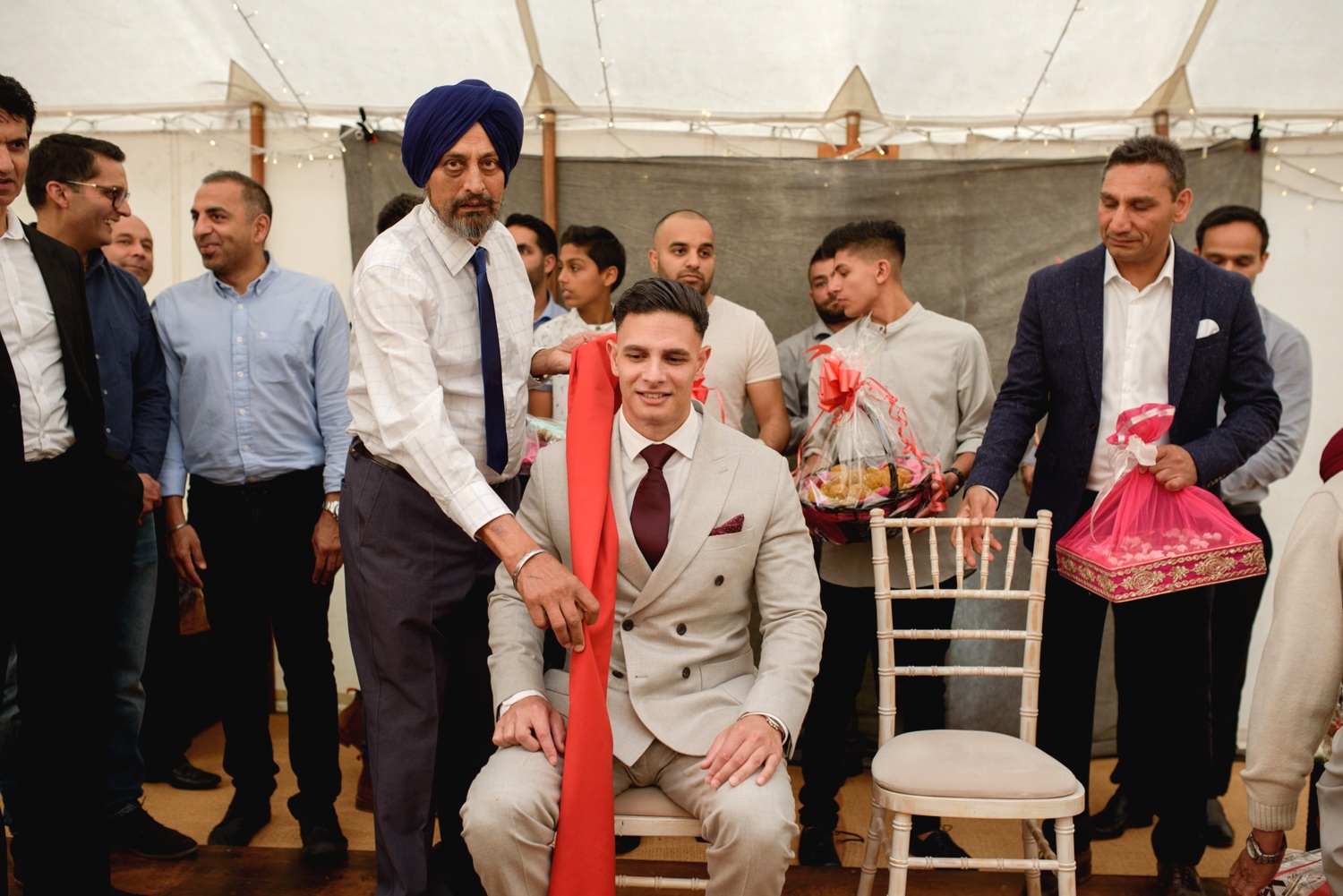
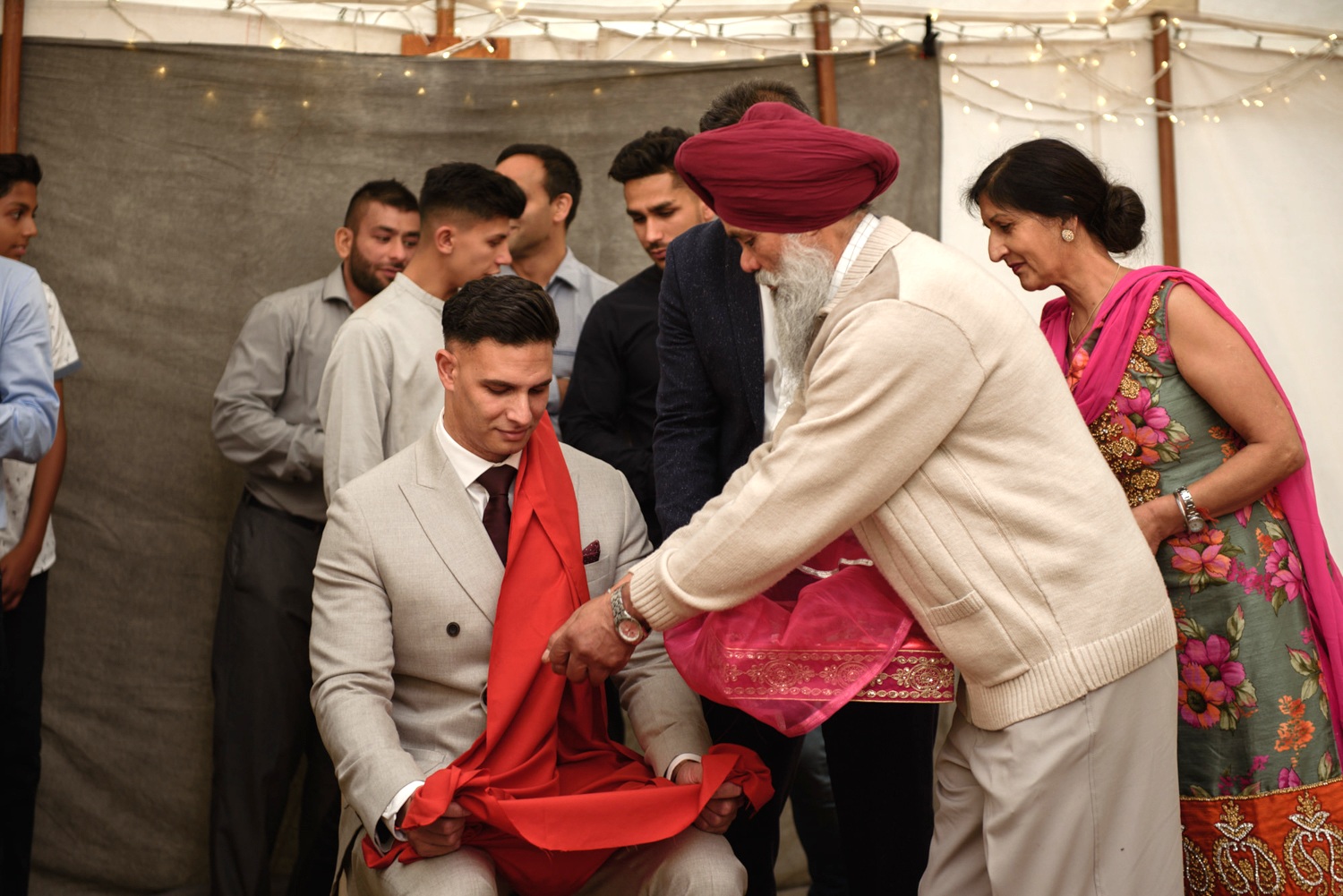
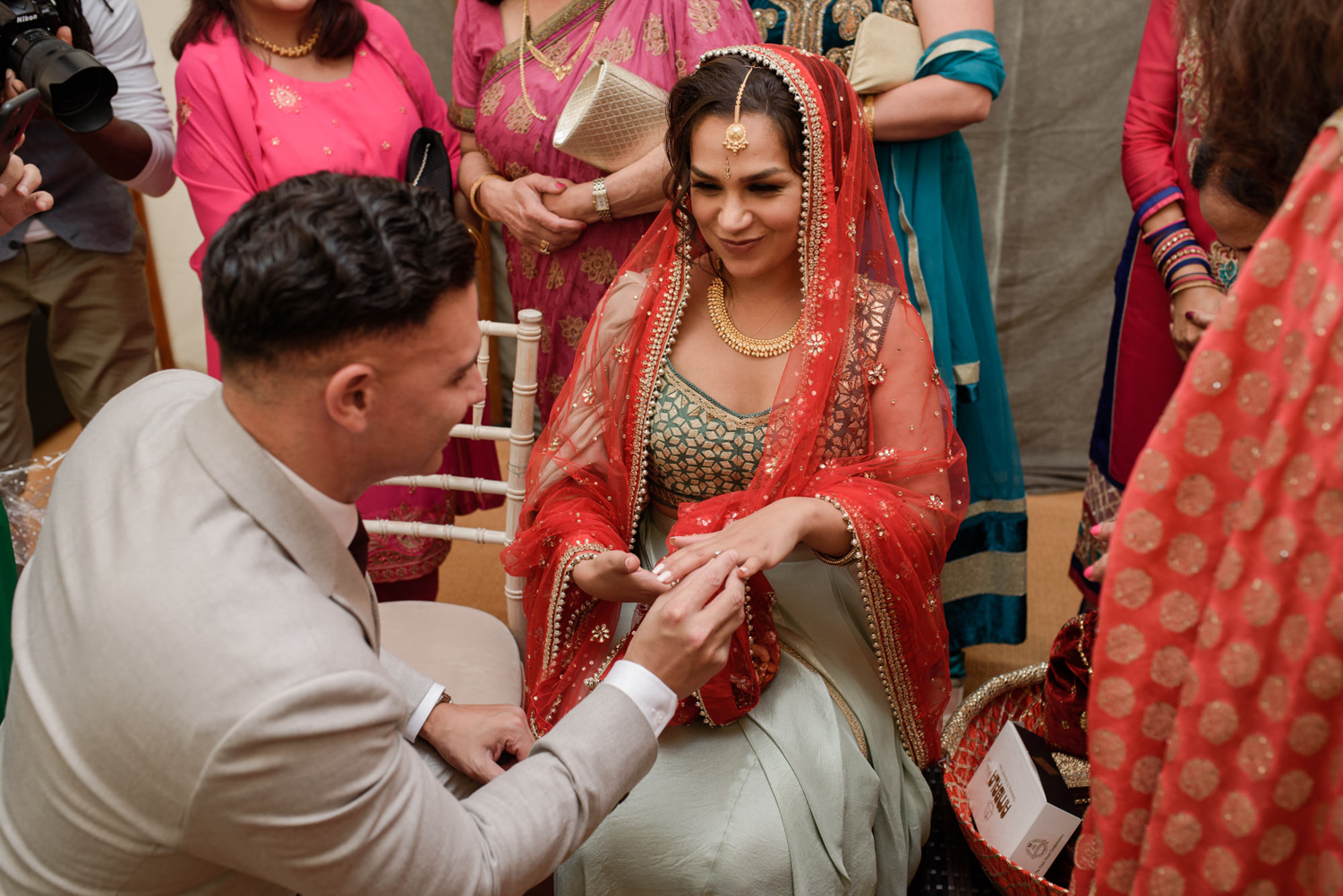
The formal engagement ceremony that takes place at the groom’s house or the Gurdwara. Prior to the engagement proceedings kicking off, the priest or Granthi offers a short prayer. The groom presents the bride with a ring the bride’s family in turn presents him with a Kara (steel bangle) and a Kripan, a small knife a symbol of the Sikh’s heroic heritage.
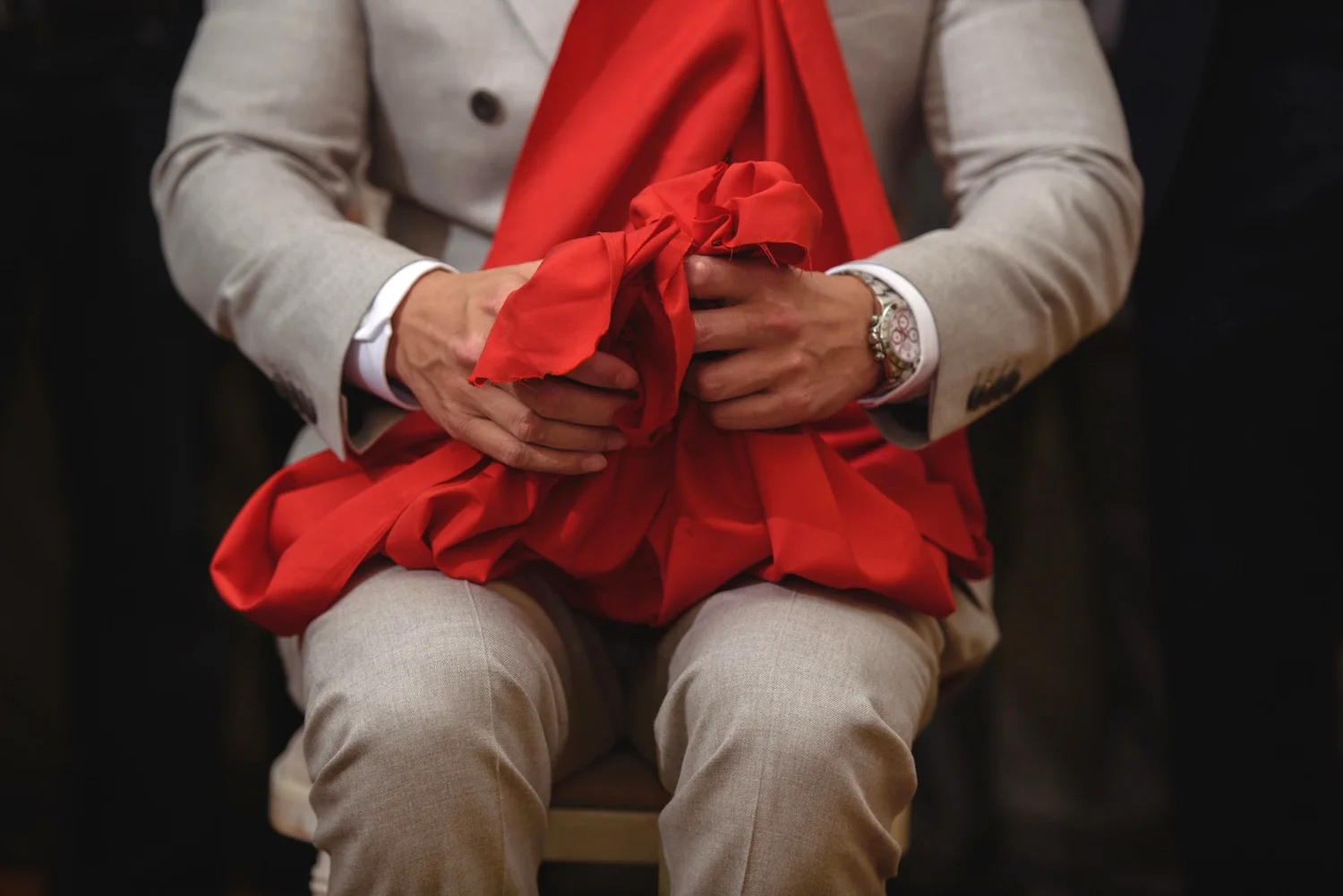
A red scarf is placed around the groom’s neck onto his shoulders, and a few dried dates are placed in his hands the bride’s grandfather then feeds the groom dates, once the formalities are completed the family present their guest with a meal and drinks.
Shagan
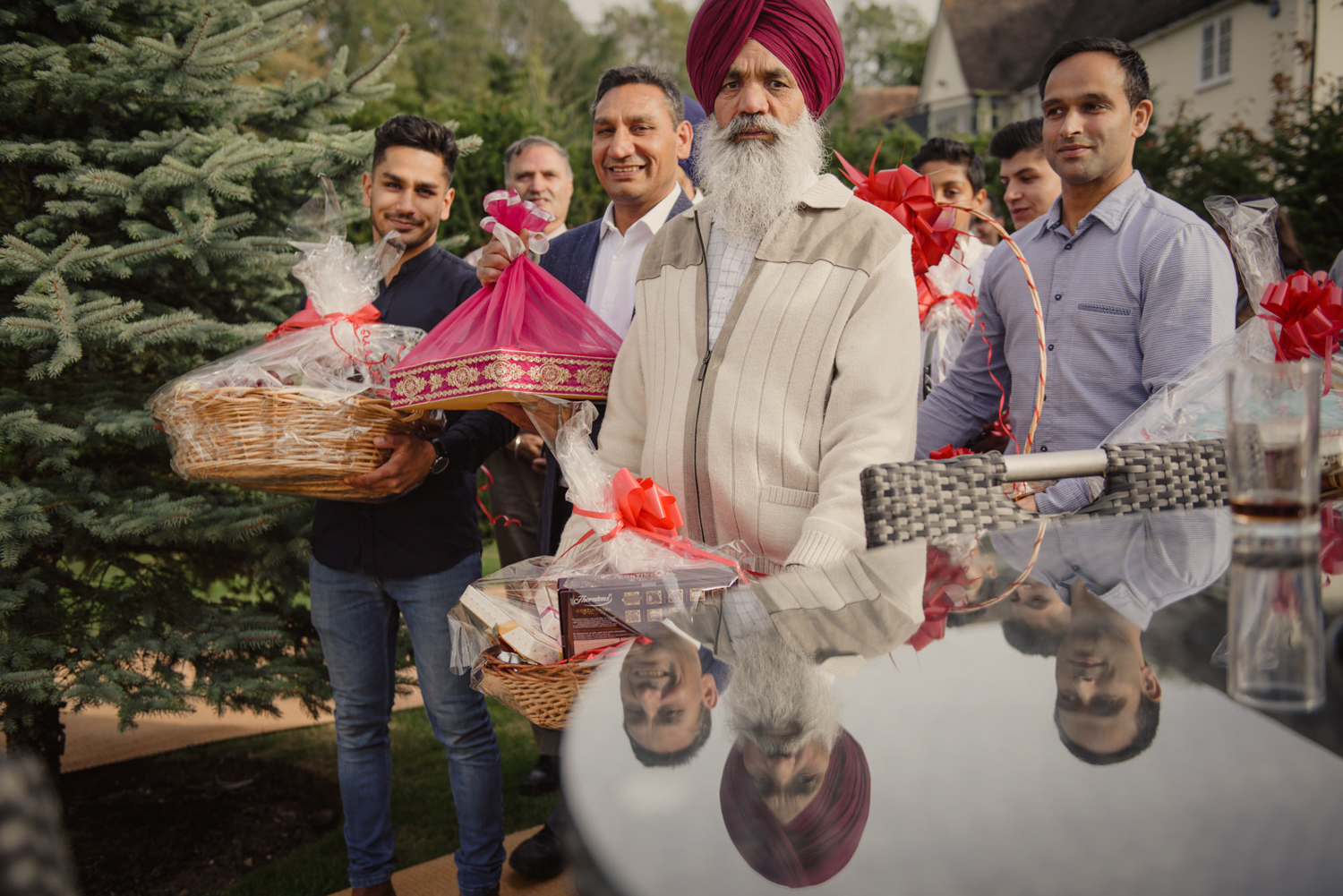
The bride’s family sends gifts to the groom’s family home before the wedding ceremony. The gifts are presented in exquisitely decorated trays carried by the bride’s relatives. The gifts generally tend to be a combination of fruits, dry fruits, sweets, coconuts and clothes.
Chunni Chadana
A few days prior to the Anand Karaj, female relatives of the groom visit the bride’s home to present her with an outfit to wear on the wedding day along with jewellery and makeup. The groom’s mother covers the bride’s head with a chunni (blessed headscarf). This signifies she has accepted the bride as part of her family.

Maiya
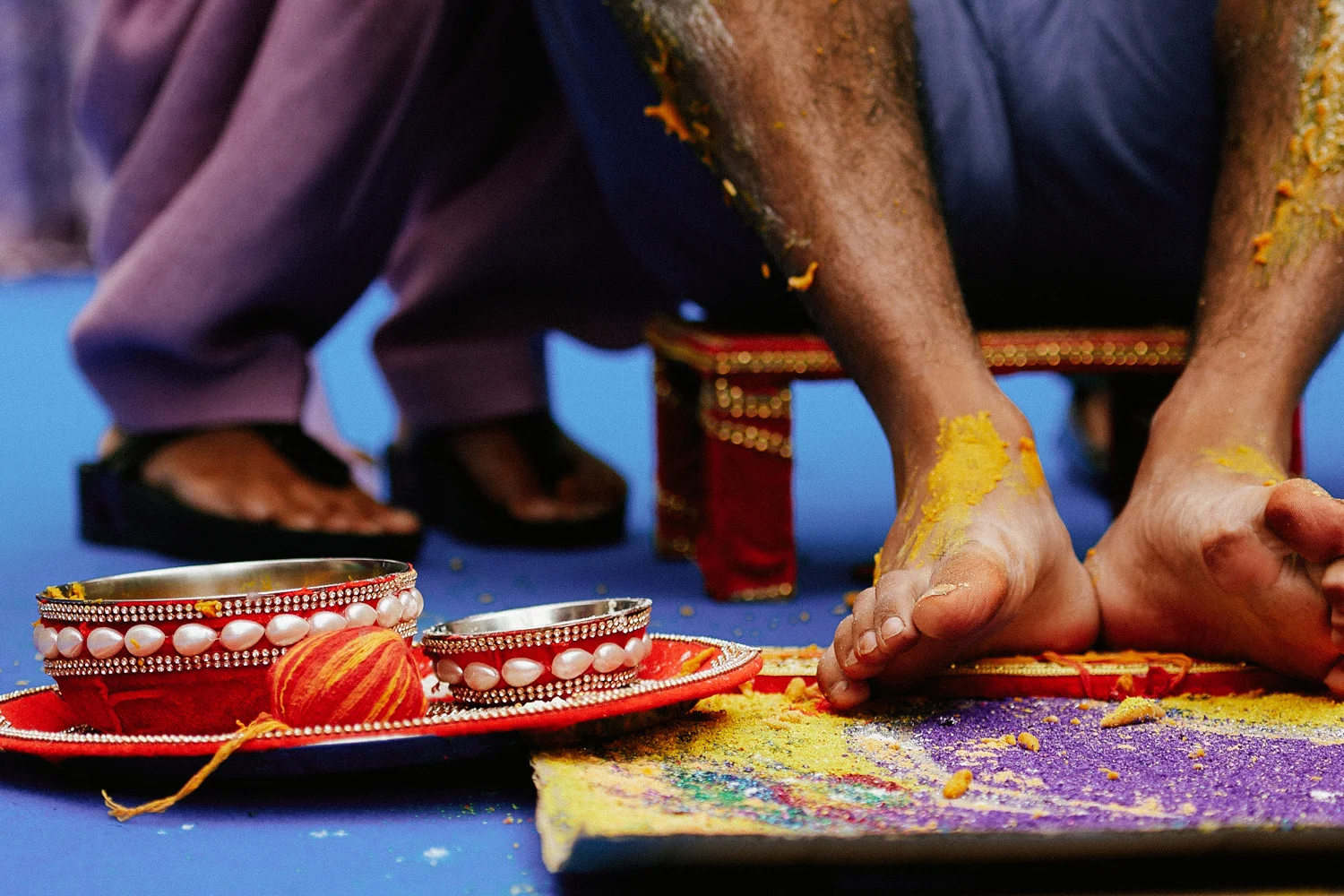
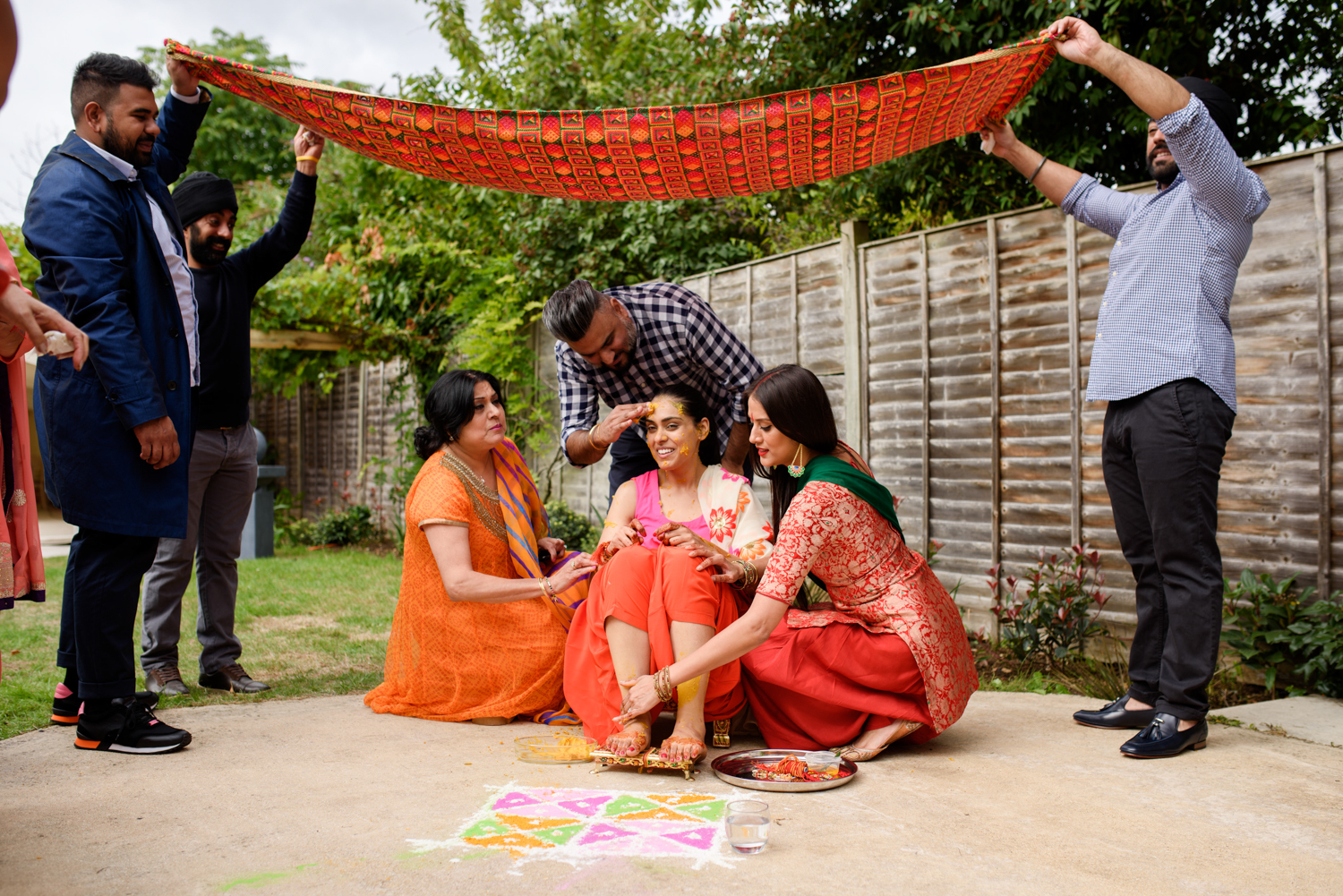
The cleansing ceremony. This ceremony can take place on any of the five days leading up to the wedding. Both the bride and groom have oil applied to their hair and turmeric paste applied on their body this occurs in their respective homes. The bride and groom’s female relatives hold up each corner of a red cloth held above the bride and groom. All the female relatives and guests sing traditional wedding songs throughout the ceremony.
Vatnaa
The married women in the family massage the bride and groom with a specially prepared paste made of turmeric, barley and mustard. The women sing wedding songs and there is a general sense of happiness at the ceremony.
Karahi Chadana
This is observed five days before the wedding. A huge Wok (Karahi) is used to cook a meal to be served to guest visiting the house during the remaining days leading up to the wedding. Food can be either savoury or sweet and it must be severed from the Karahi during the five days.
Warna
Money is waved around the bride’s and groom’s head in a clockwise motion and dropped on the couple the money is donated to charity. This is ritual is done to cast away all evil energy that may surround the bride and groom.
Gaana
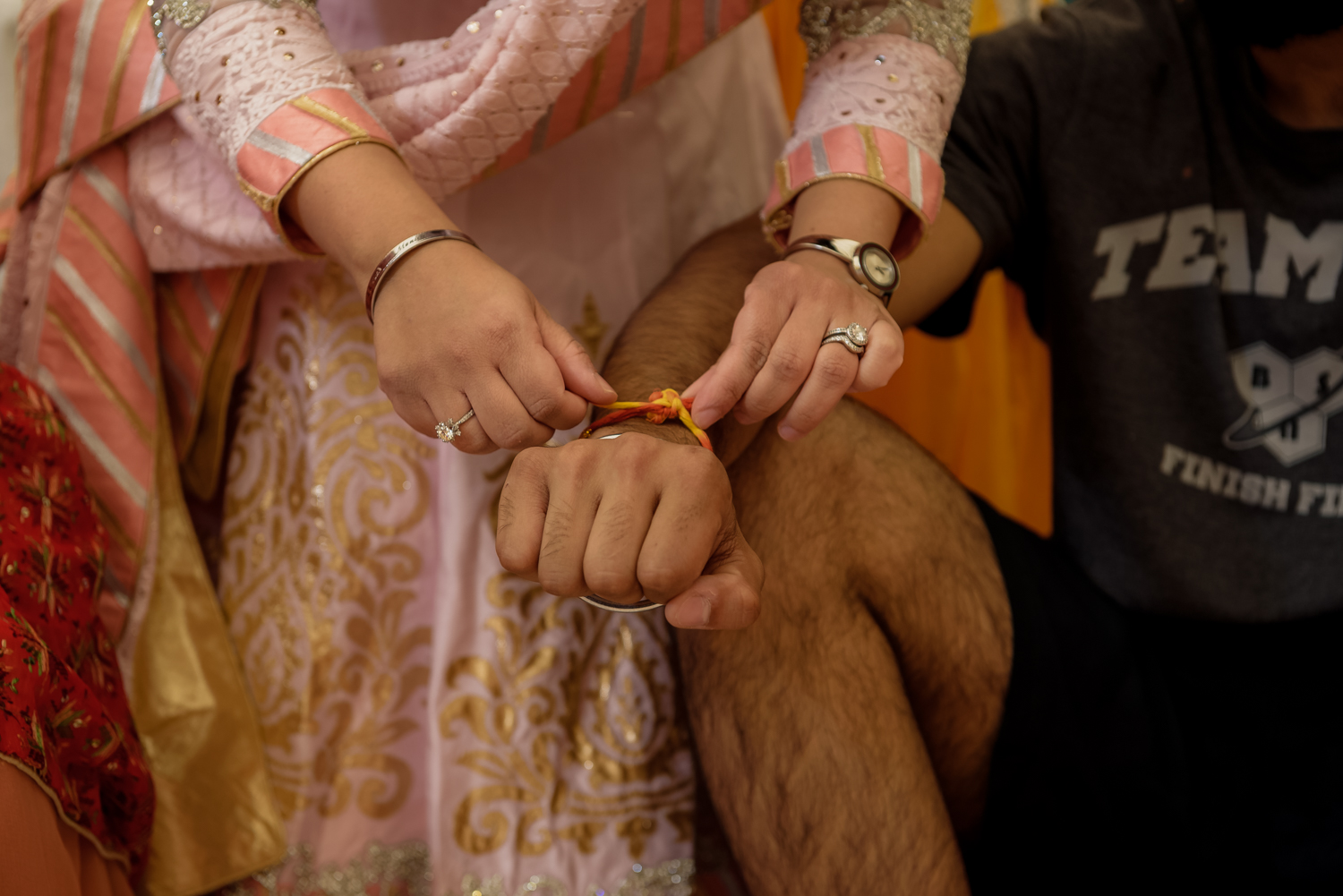
A red thread is tied on the left wrist of the bride and on the groom’s right wrist. It is believed the thread will protect them from negative premonitions.
Mehndi
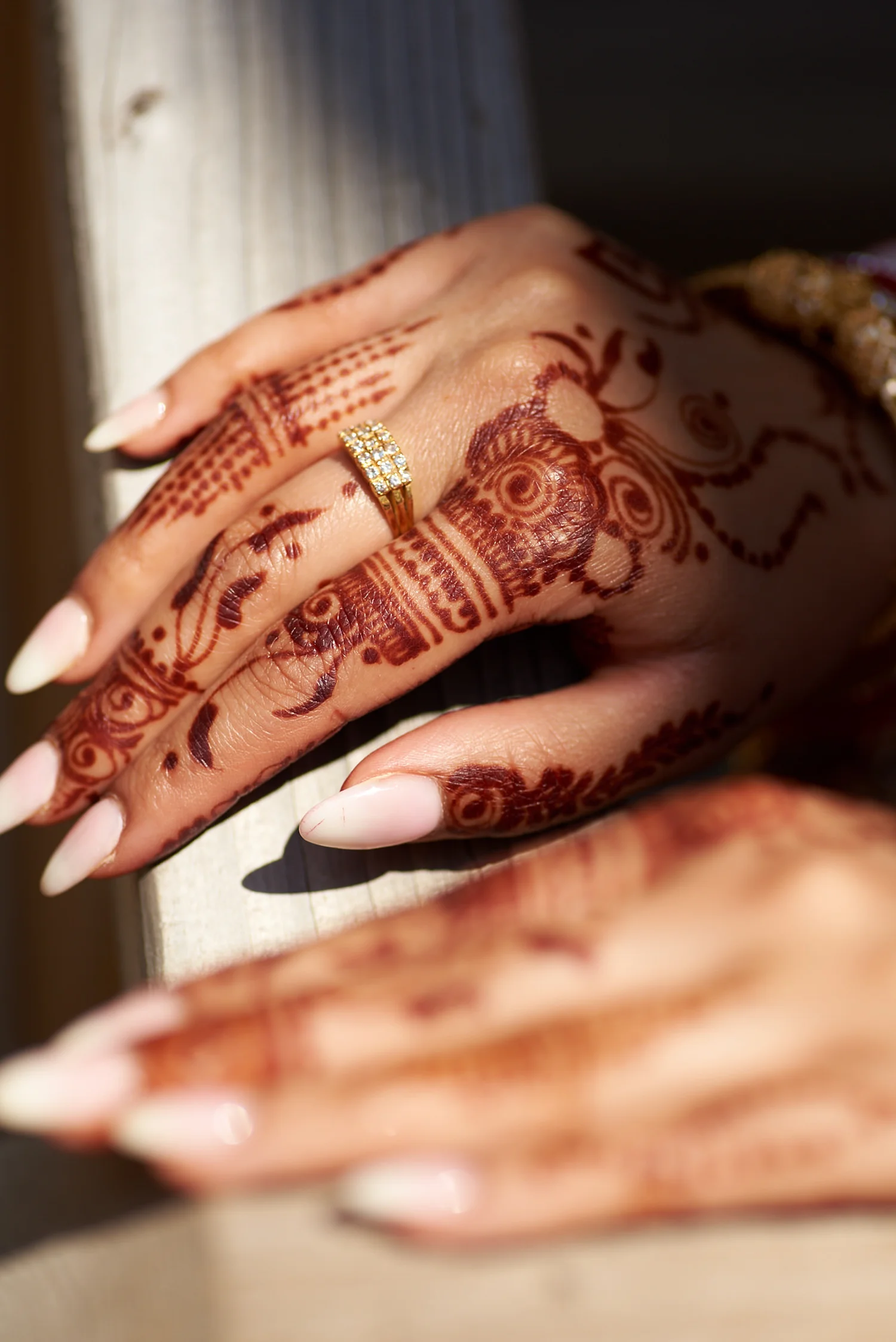
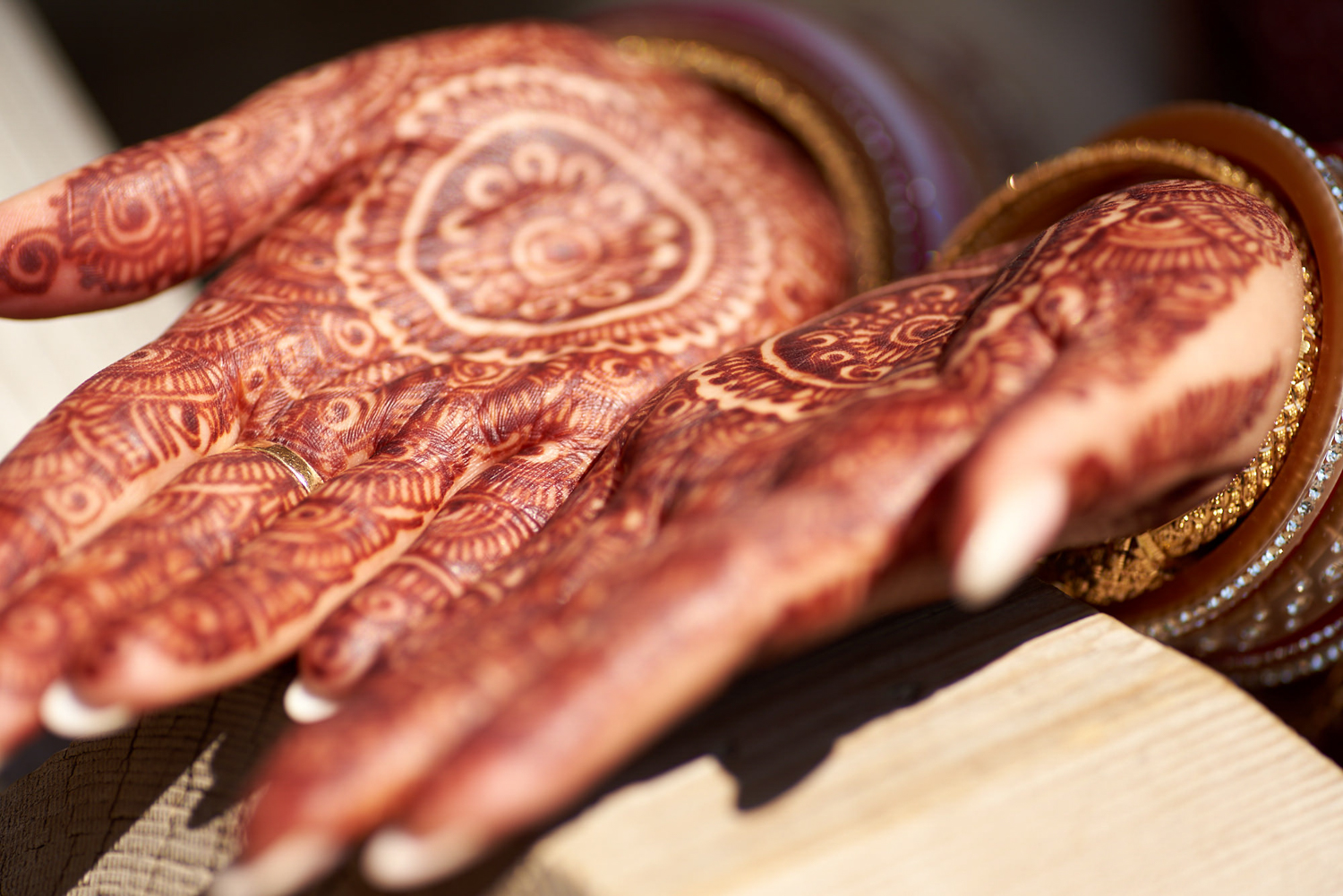
Occurs two to three days before the wedding. Henna paste is applied decoratively to the bride’s hands and feet. The gathered women of the family also have henna applied to their hands.
Chura and Kalire
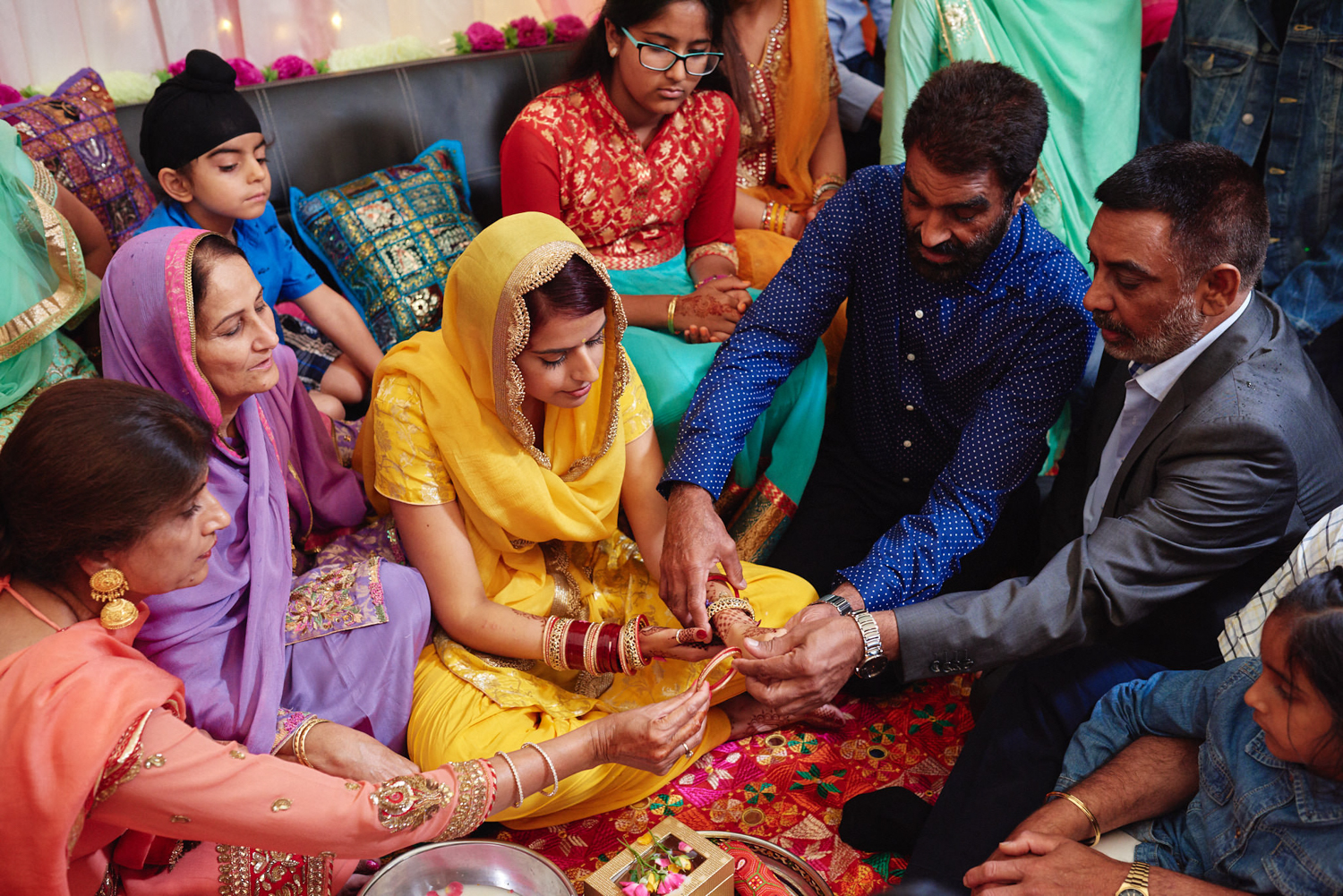
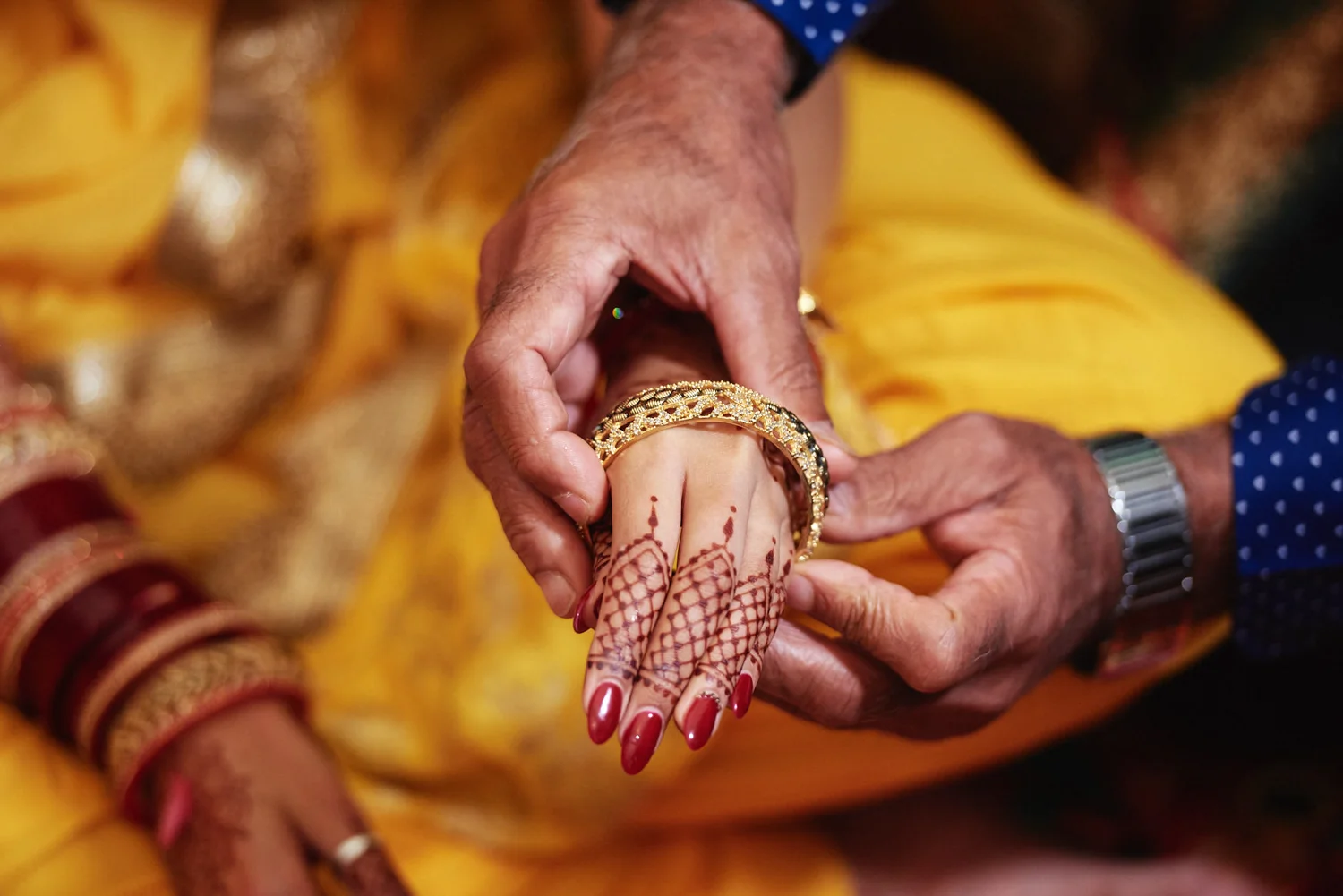
The bride’s uncle(s) gives her a set of 21 red and white bangles (Chura) that have been blessed by washing them with curd and rosewater. Once the bride wears the bangles, they are covered with a silk shawl to conceal them from her.
On completion of the chura ceremony, bride relatives tie umbrella-shaped metallic ornaments known as kalire onto her bangles and offer their blessings. All unmarried female friends and relatives of the bride are gathered and she moves the kalire over each of their heads. It is believed that on the head a kalire falls, she will be the next one to wed.
Wedding Attire
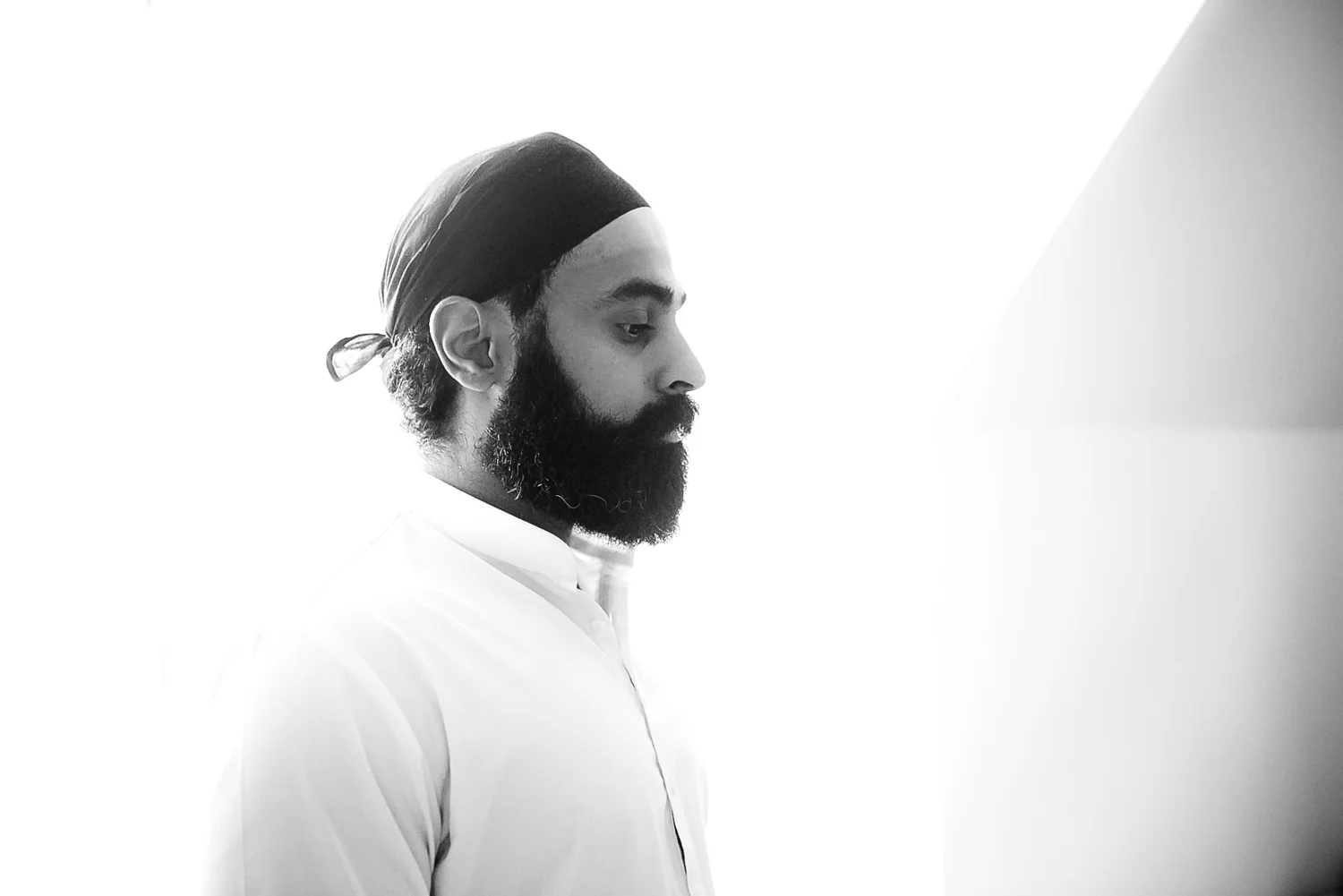
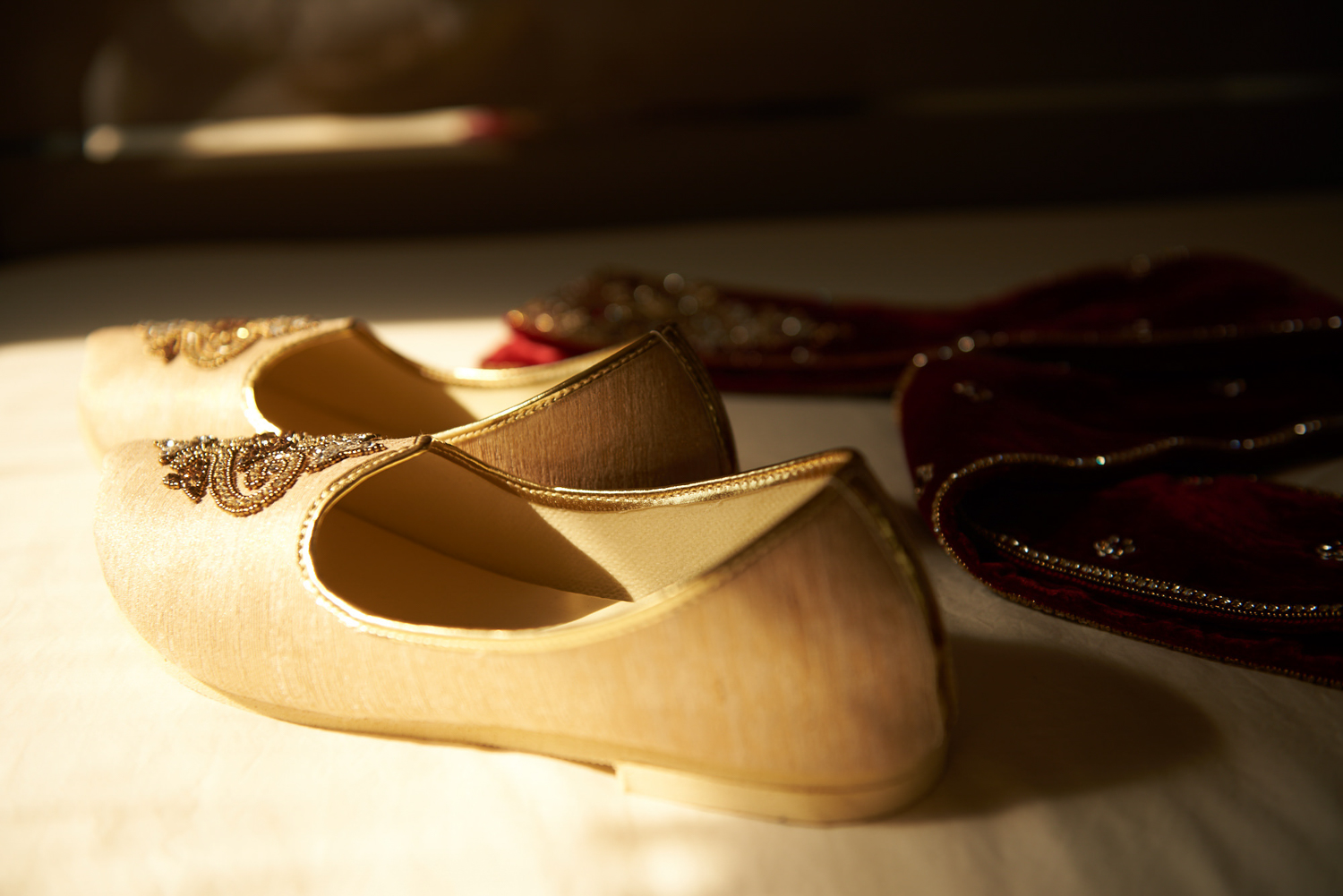
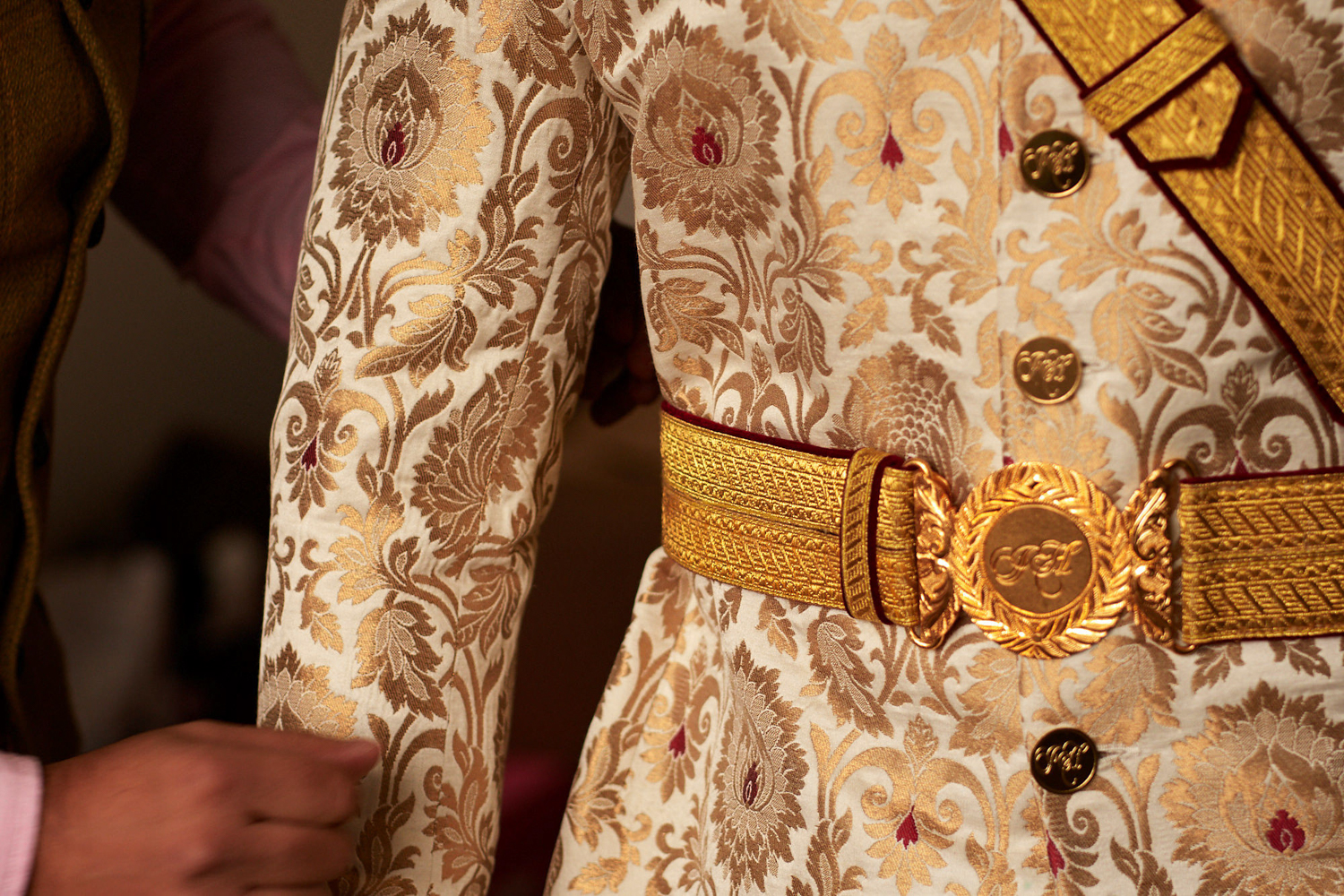
Traditional Sikh grooms prefer wearing Kurta, generally white in color, over which they don an Achkan or long overcoat. The achkan is often made of premium fabrics like silk or brocade. Nowadays grooms also wear Sherwanis over the kurta instead of a traditional achkan. The Achkan or the Sherwani are highly embellished with threadwork, beadwork and even with precious stone setting sometimes. He pairs either the Achkan or the Sherwani with a Churidar Pajama. The groom also sports a traditional ‘Mojri’ as part of his wedding outfit which is an embellished slipper. The groom is required to sport a beard as a symbol of adherence to the Sikh faith and he is supposed to wear a turban around his head, typically of pink cloth.

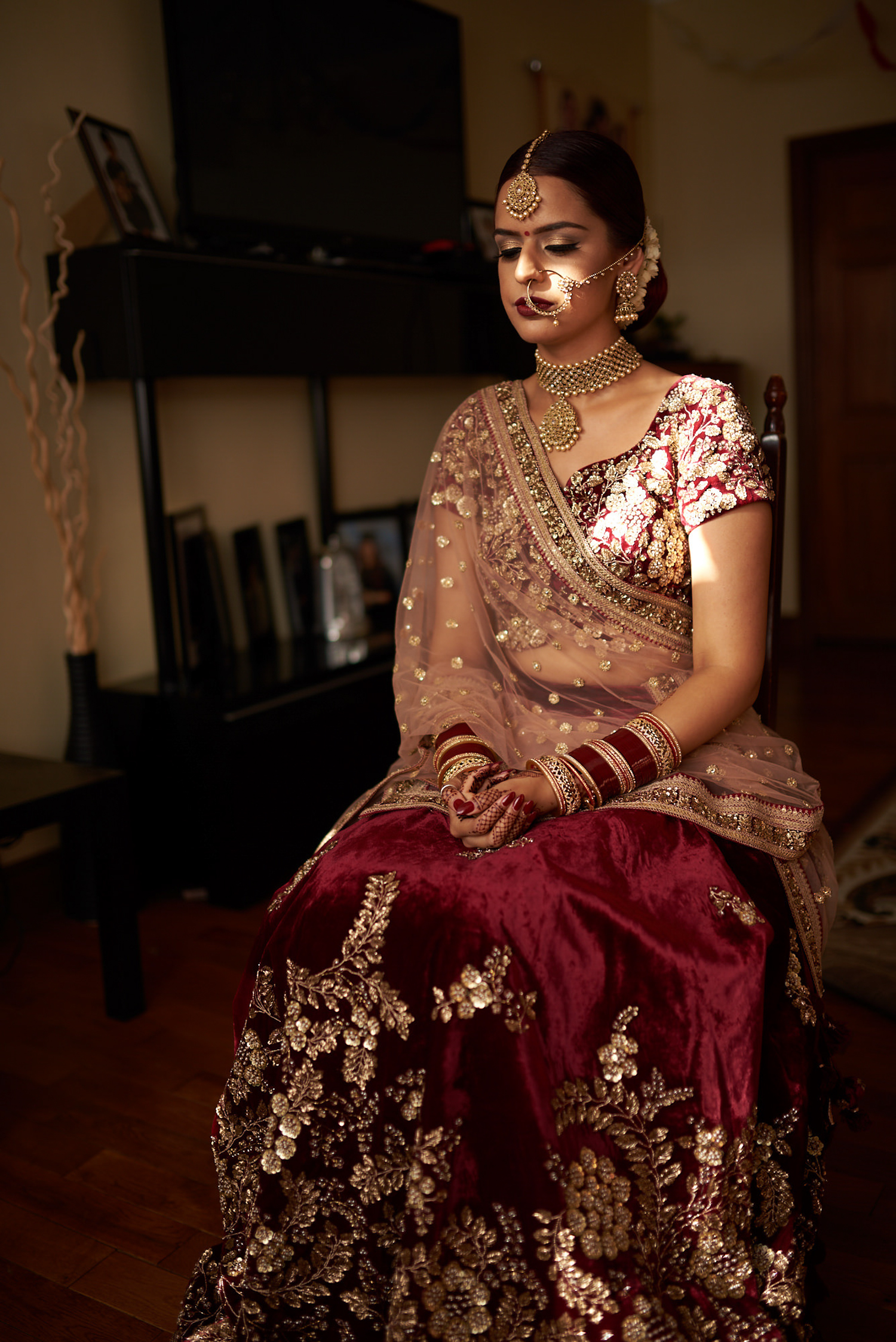
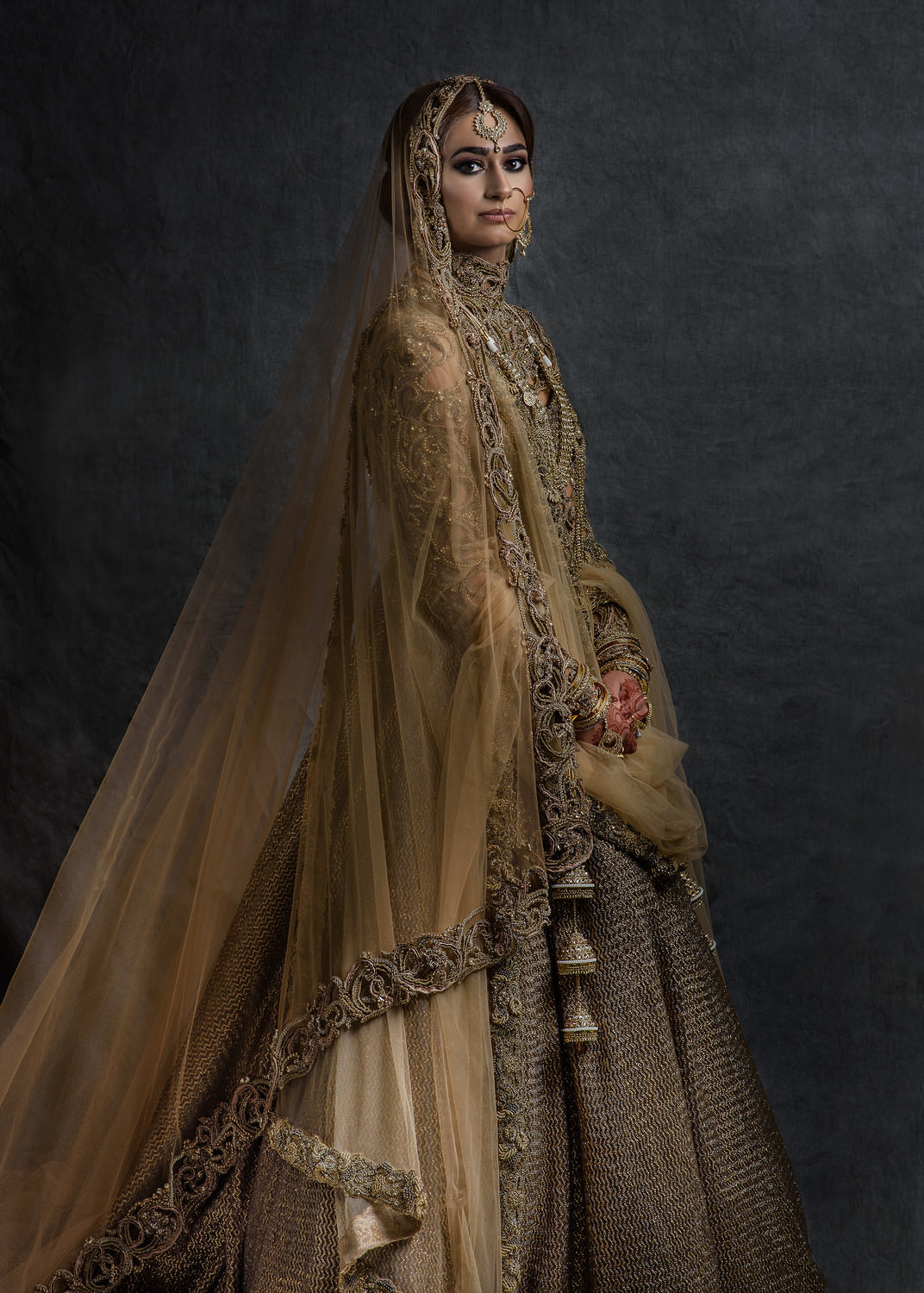
Sikh brides tend to wear ornate, decorative and exquisitely embroidered set of Salwar Kameez. The traditional wedding dress colour is red. In modern times brides choose to wear many different colours. The brides head must be covered with the dupatta.
Lehengas are popularly worn as wedding dresses by Sikh brides. The wedding dress is complimented with traditional jewellery in the form of necklaces, earrings, bangles, panja, payal and mangtika.
Wedding Rituals
Sehra Bandi
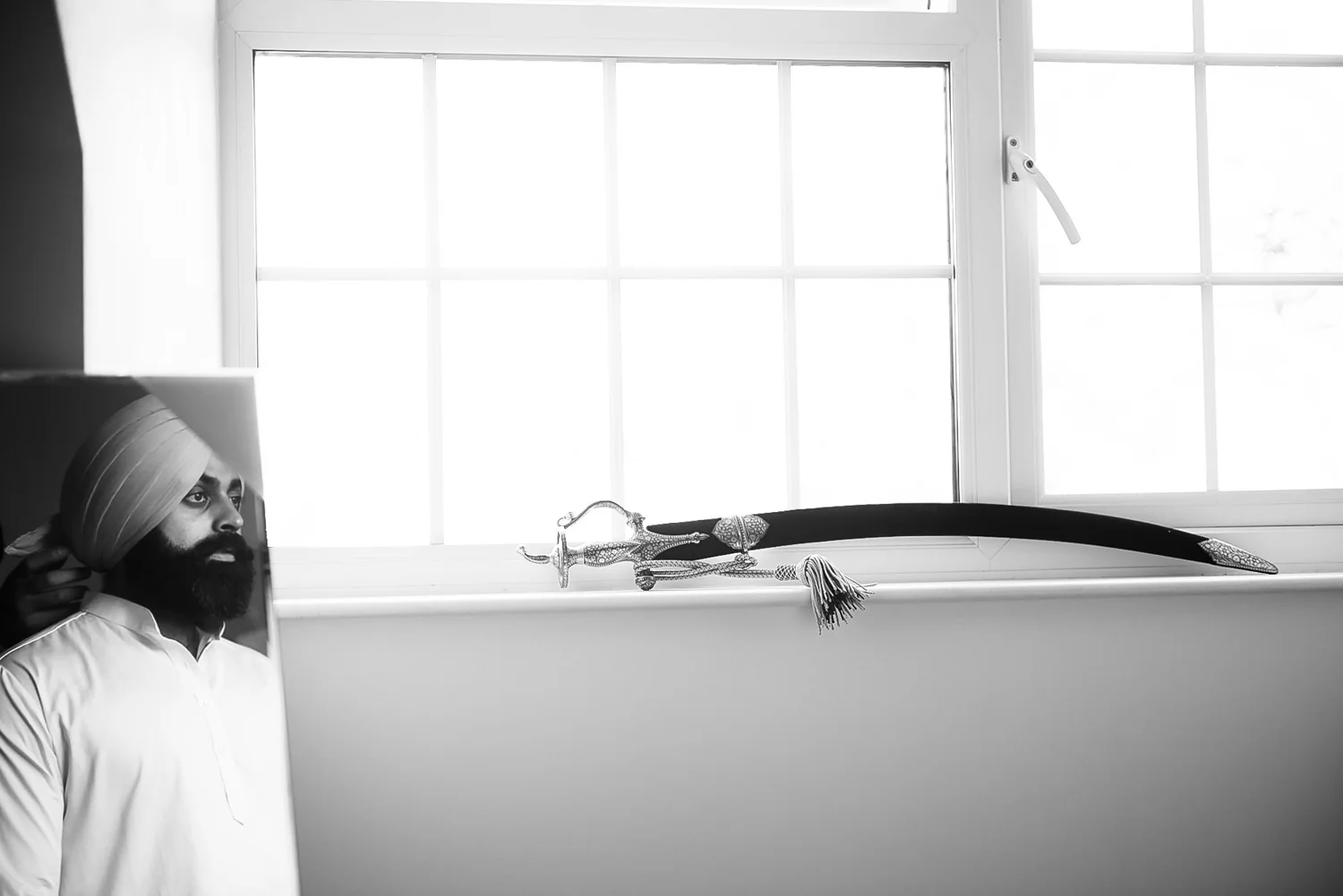
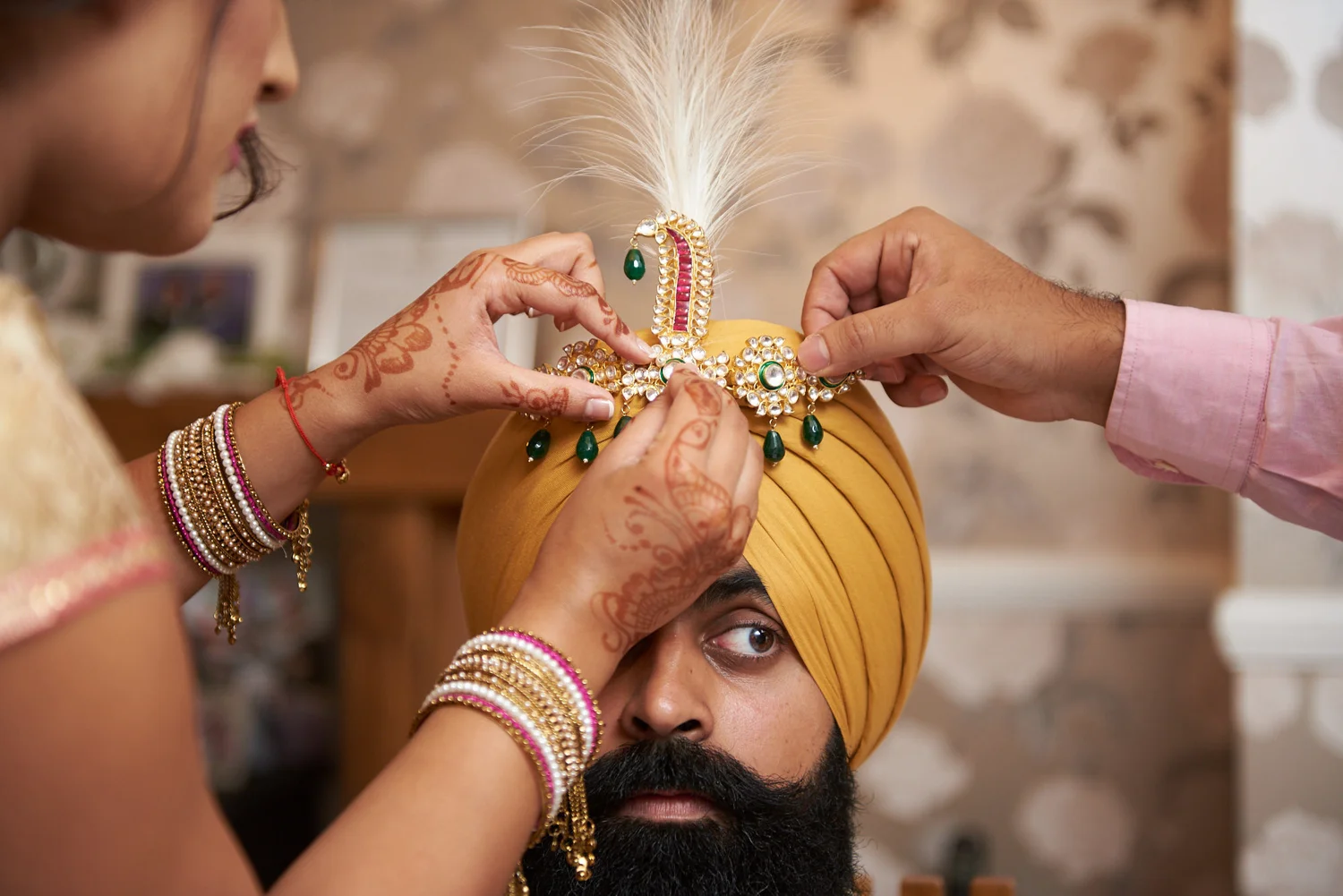
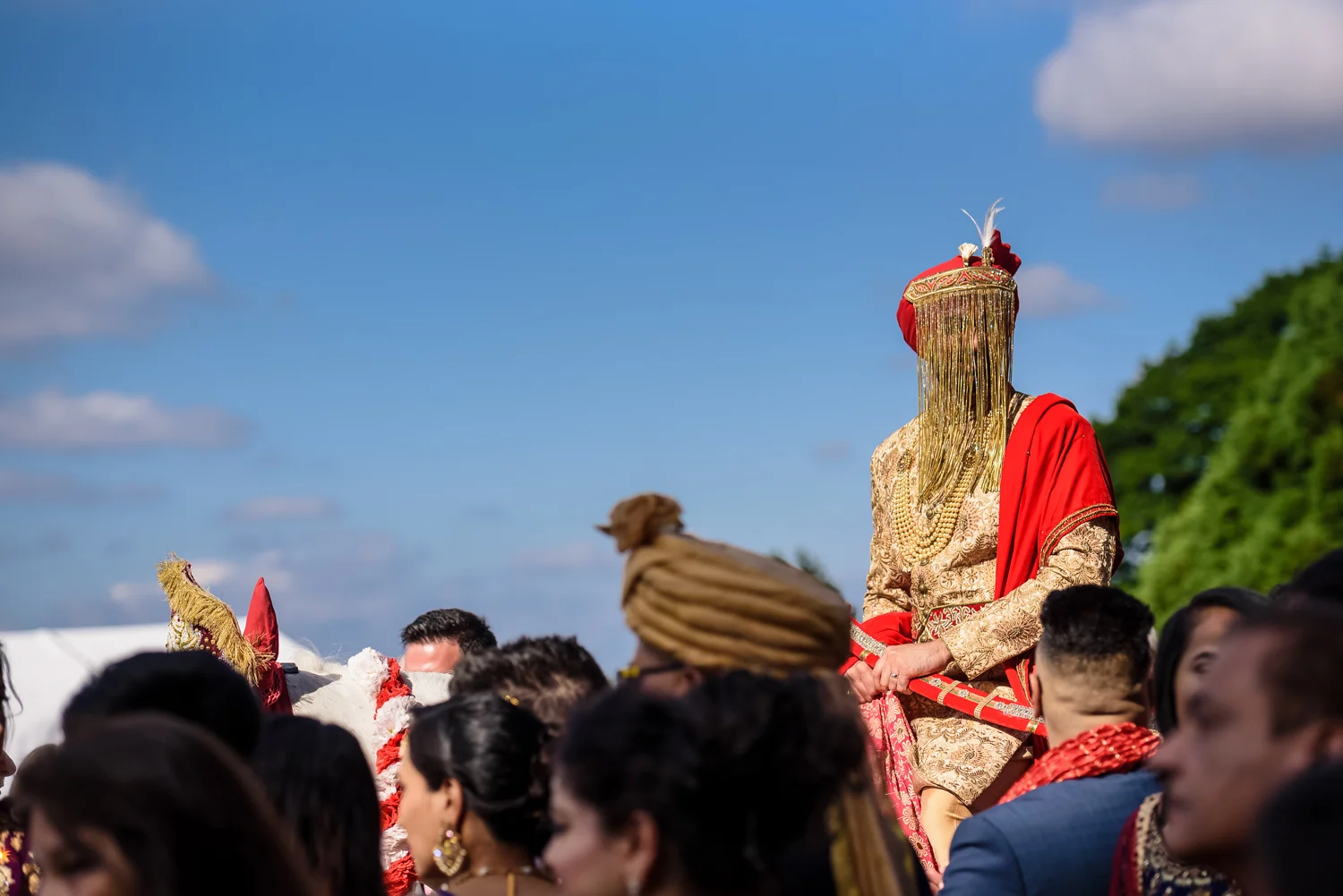
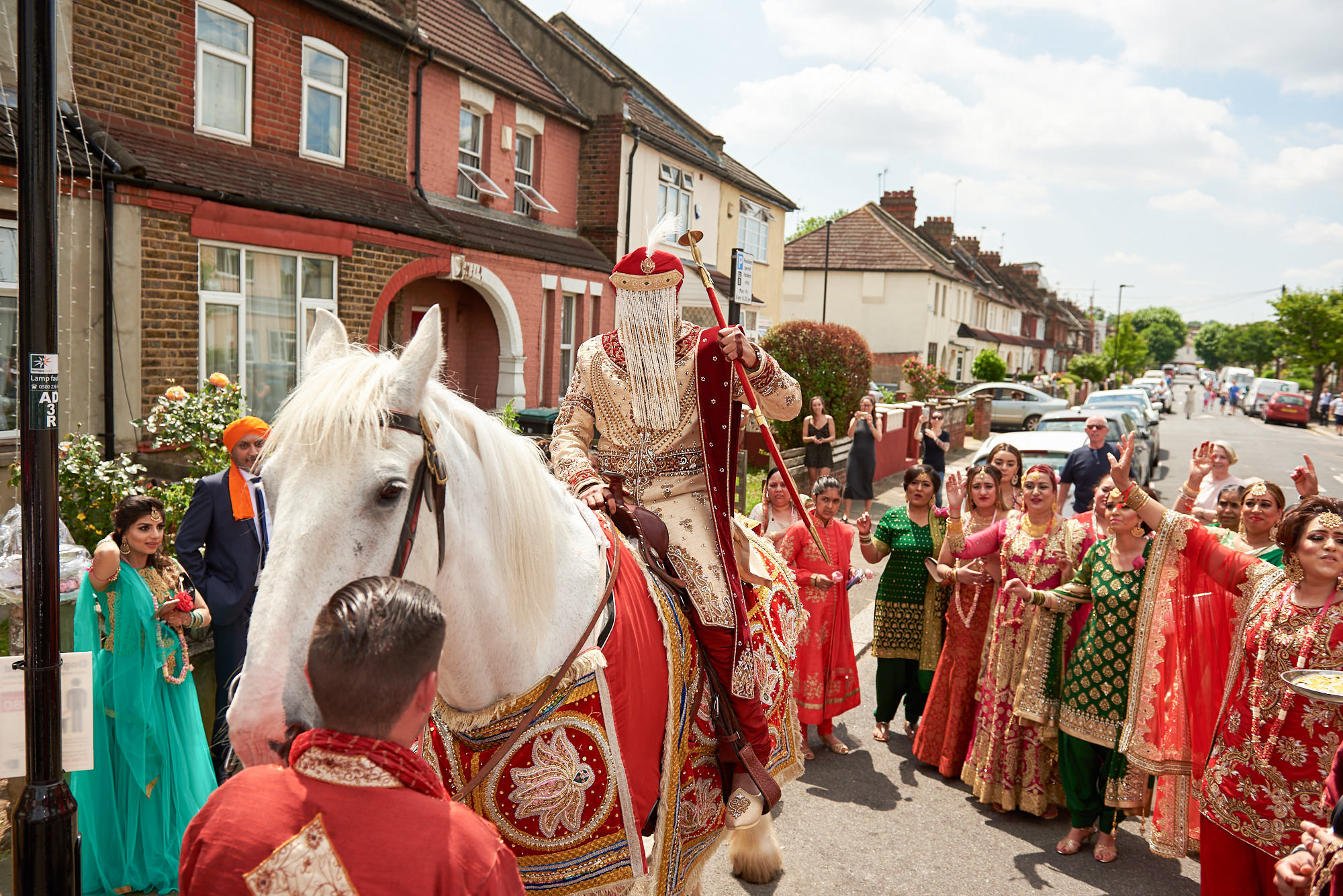
Before the wedding party departs from the groom’s home, his turban is tied for him by his father. The groom is handed a sword by his father that he carry’s during the wedding ceremonies. The sister of the groom ties the Sehra, made of golden ribbons, flowers or a string of pearls, around his turban covering the groom’s face.
Soorma and Kalgi
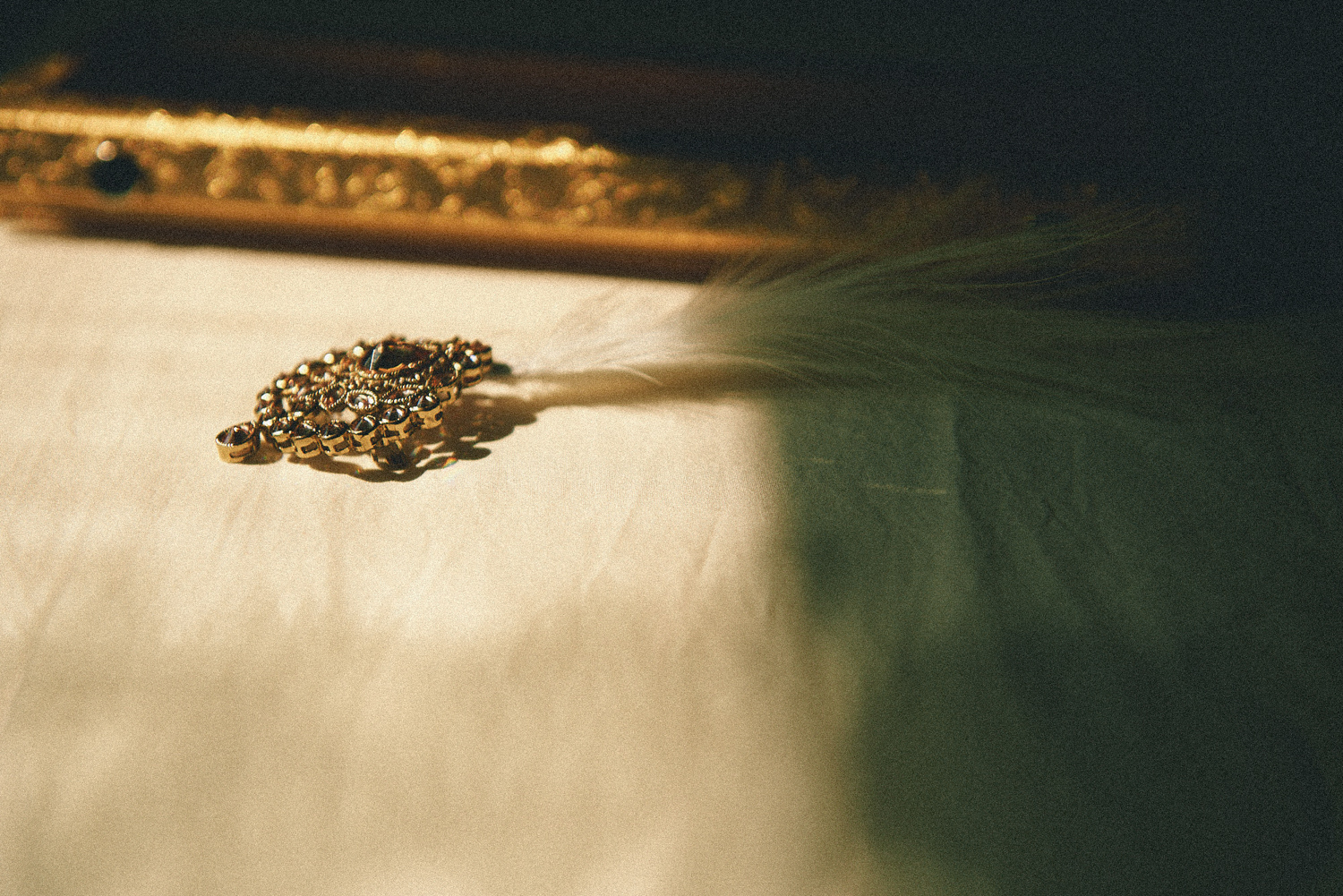
The groom’s sister-in-law puts a dot of kohl (surma) onto the side of his forehead to defend against any negative energy around him. The groom’s sister ties a piece of jewellery onto his turban then stands between him and the front door. She demands he gives her gifts in return she will allow her to leave the house to attend his wedding.

Baraat
By tradition the groom travels to the bride’s house or Gurdwara on a horse decorated with golden ribbons and other accessories. His family and friends follow behind him on the mare to the wedding venue playing music, singing and dancing.
Milni
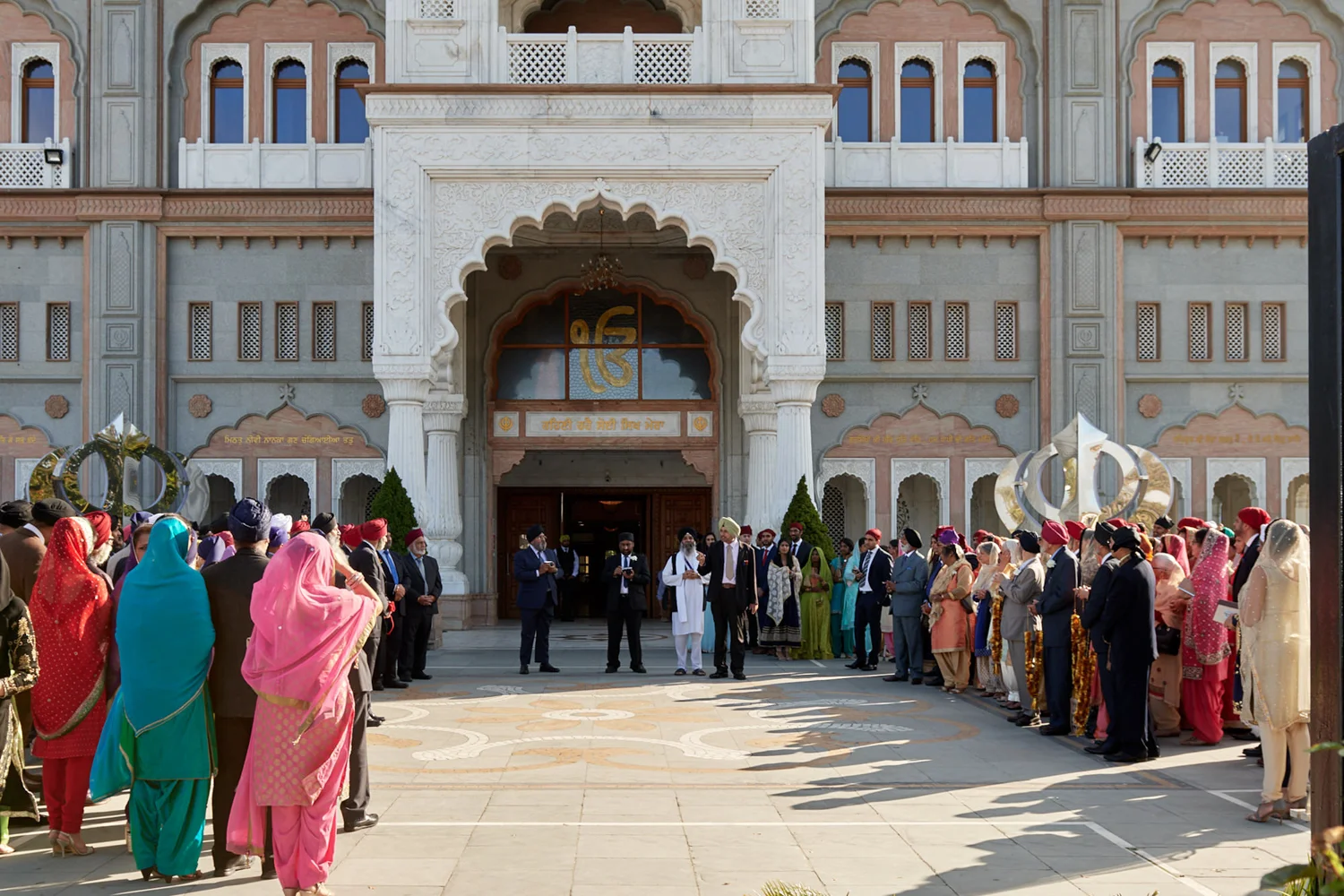
The baraat is welcomed at the gate of the Gurdwara, by the bride’s family and friends sing hymns and utter their faith in God’s workings. In the main it is the men of the families who participate in the Milni. As each member of the baraat is introduced, a member of the family from the bride’s side offers them a garland and a warm hug.

Anand Karaj
Anand Karaj – The ‘Blissful Union’ takes place at the Gurdwara during the day time.
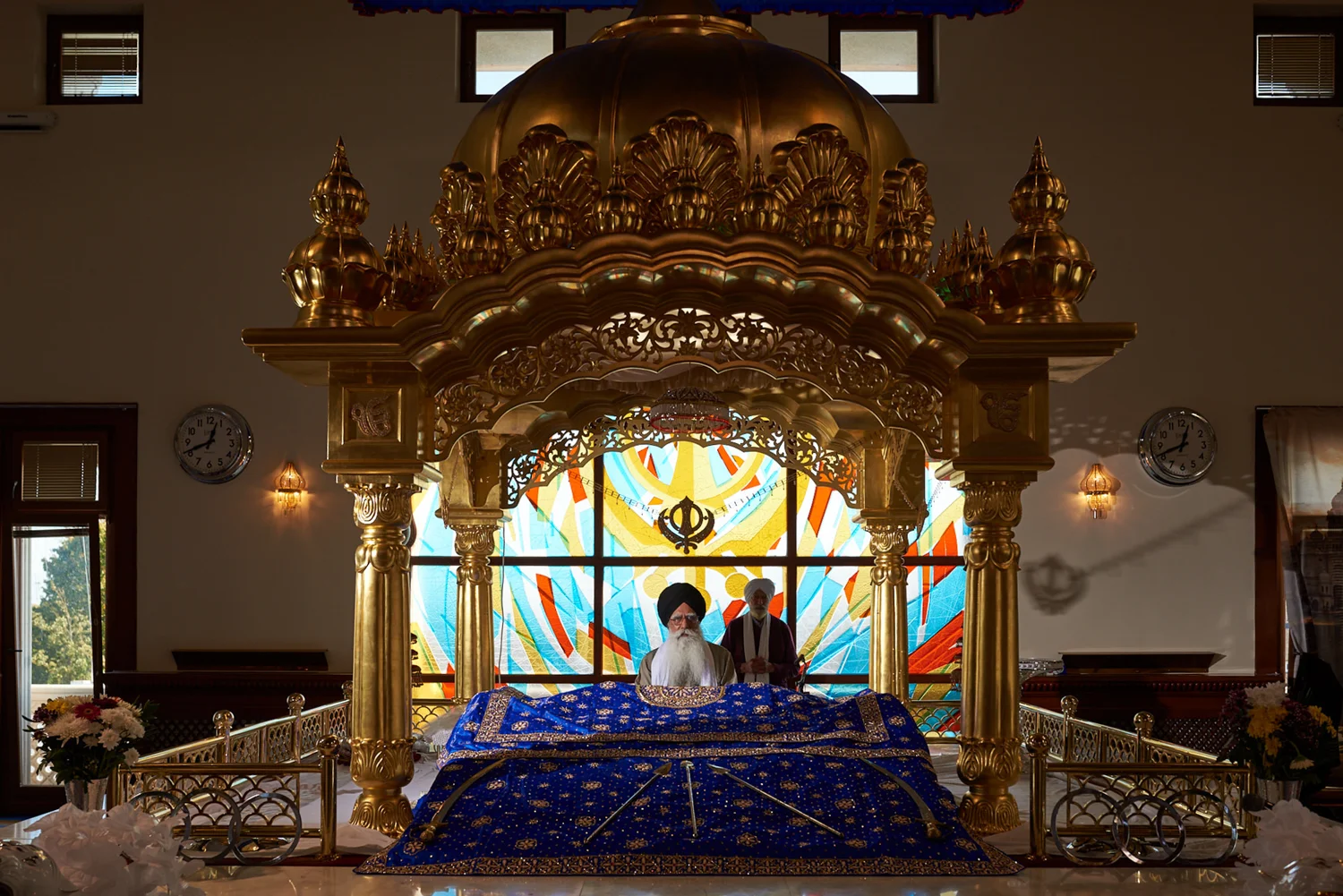
The wedding ceremony is centred around The Guru Granth Sahib (Holy Book). The groom enters the ceremony hall first once the bride arrives the couple sit next to each other on the floor with the bride sitting to the left side of the groom, facing the Guru Granth Sahib. The marriage is conducted by a Amritdhari (Amrit Initiation in Sikhism) Sikh.
The couple and their respective parents stand to offer Ardaas to ‘Waheguru’, followed by singing of Shabads. The priest tells the couple about the importance of the marriage and their union their responsibilities to each other the general idea of leading a spiritual life according to Sikh tenets.
The couple then bows down before the Guru Granth Sahib. The father of the bride places a saffron coloured scarf on the groom’s shoulder and the other end in bride’s hand. This symbol they now joined and ready to take the Lavaas (wedding vows)

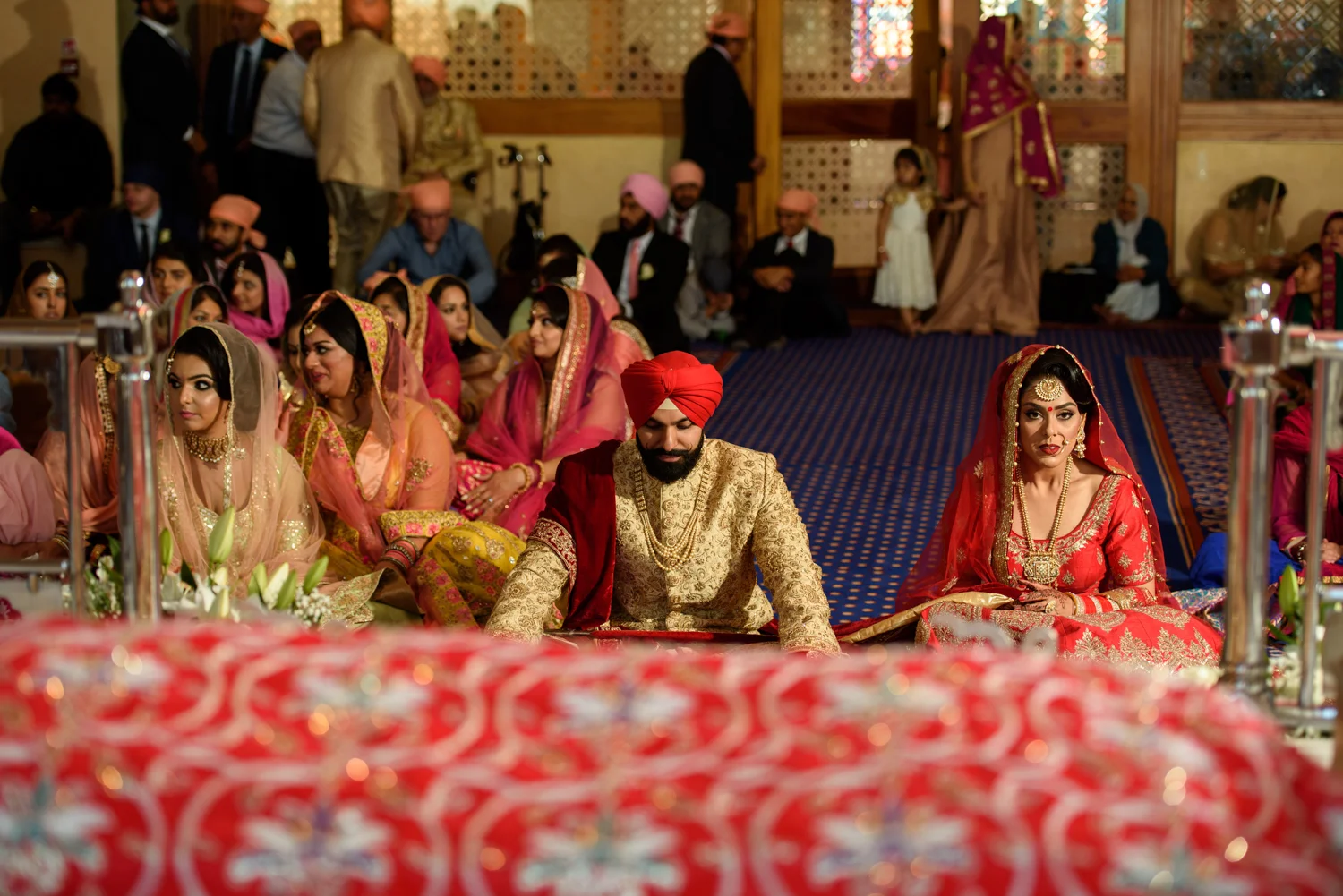

Lavan Pheras
The priest conducting the marriage performs the four Lavan or stanzas from the Guru Granth Sahib. Upon completing the reading of the first stanza, the couple walk slowly around the Guru Granth Sahib in clockwise direction, with the groom leading the bride.
At the completion of the round the couple return to their positions yet remain standing for the remaining three hymns. The process of circumambulation is repeated three more times after each Lavan. The Raagis sing the Lavans in the background while the couple performs the Pheras.

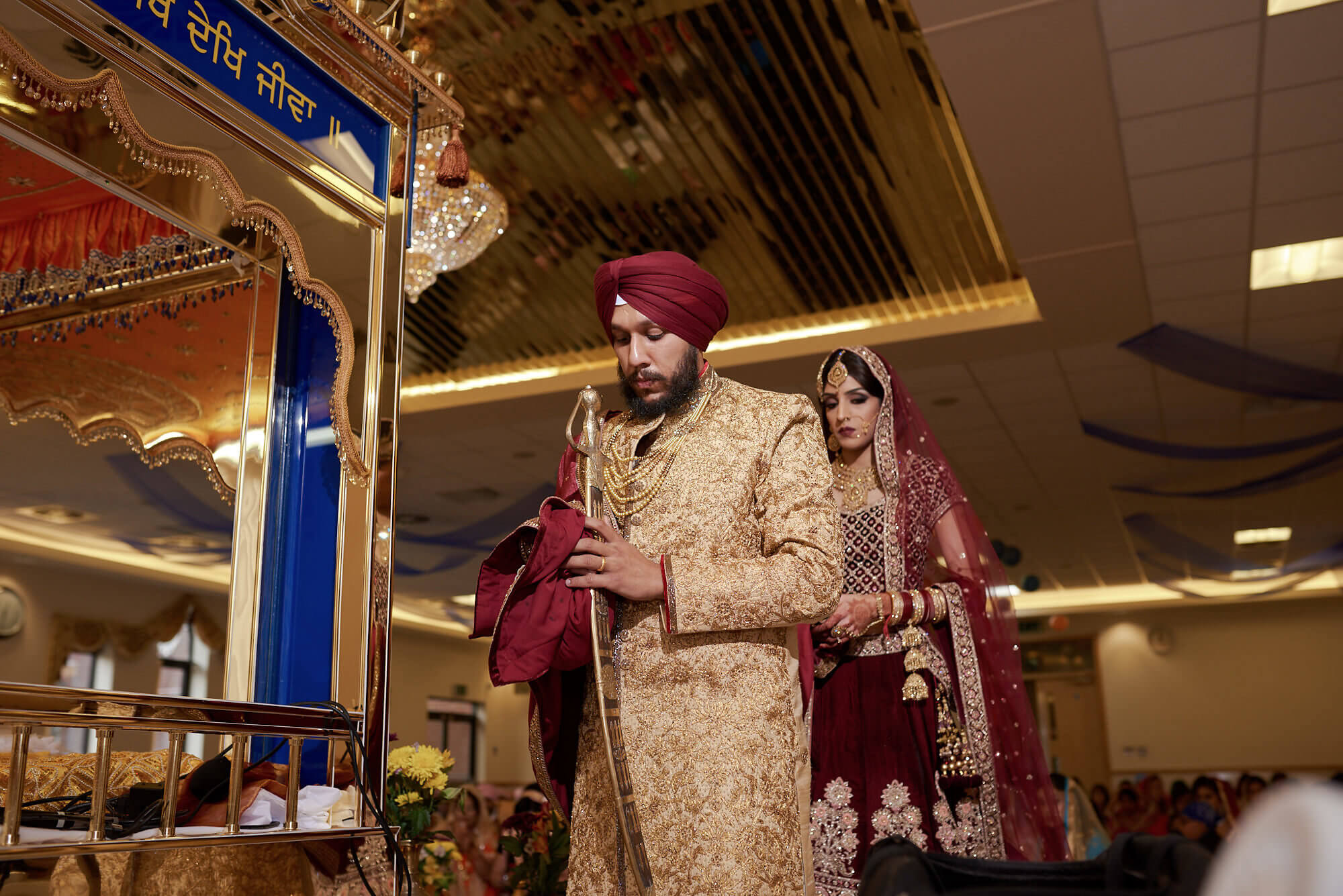
Anand Sahib
The Raagis sing hymns of Anand Sahib. An Ardaas is offered as an indication that the wedding ceremony is complete. A random Hymn from the Guru Granth Sahib is chosen to be recited while Khatah Prasad is distributed among the congregation.
Langar
The guests are served a vegetarian lunch at the Gurdwara. Subsequently, a ceremony called Roti follows, it signifies the bride’s first meal as a married woman. Her in-laws cover the platter with a cloth and present it to the bride along with some cash and other gift. The bride shares this meal with the groom.

Post-wedding Rituals
Sadaa Suhagan
The bride changes into an outfit presented to her by the groom’s family and accessories with jewellery also gifted to her by the groom’s family. The bride is blessed by the elders of the family with monetary gifts and wishes of Sada Suhagan (blessings to never experience widowhood).
Reception
A reception party is hosted by the groom’s family to honour the newly-wed couple, they invite family and friends to enjoy and share an extravagant meal and engage in a celebration filled with singing and dancing.

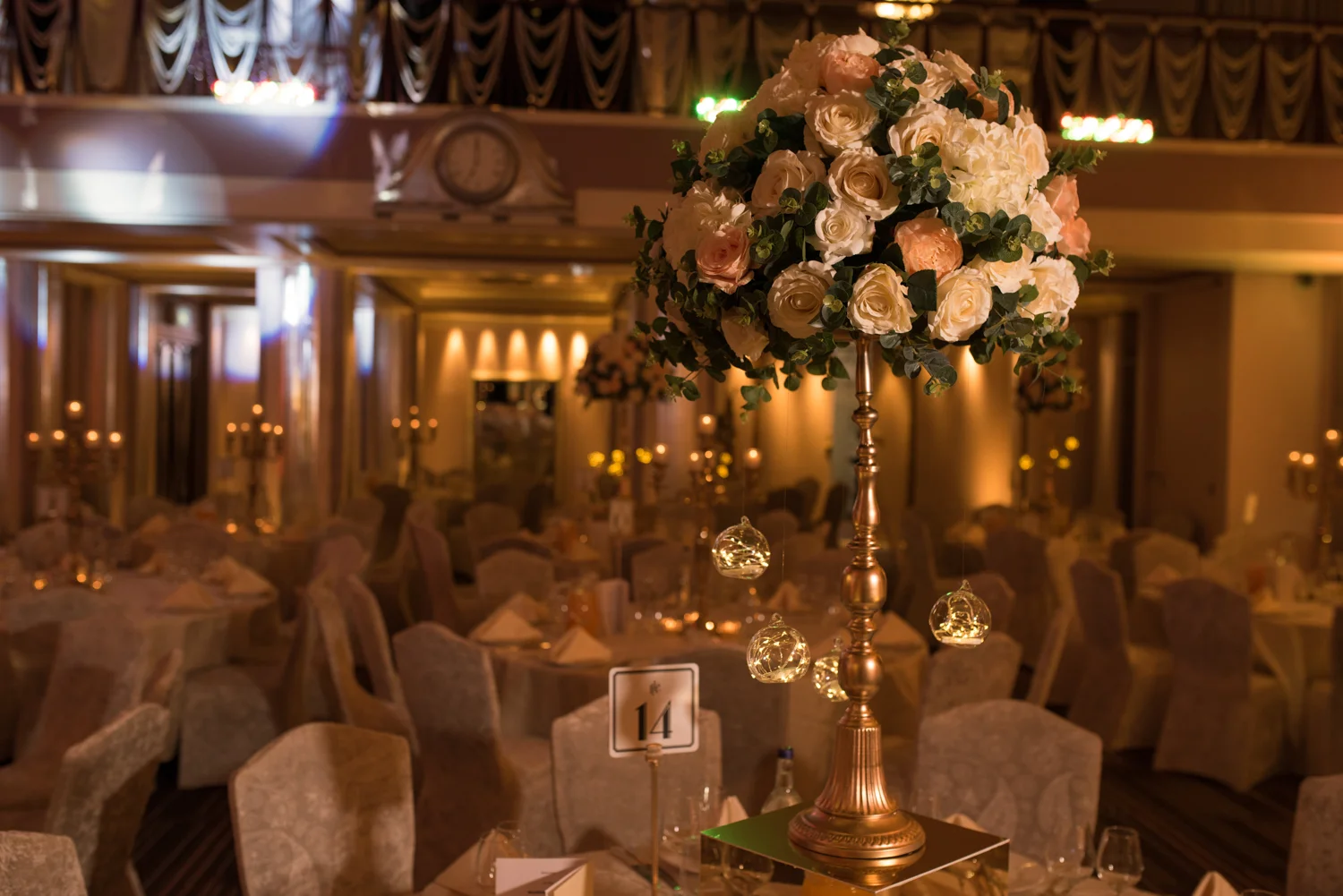
Doli
Doli is traditionally a wooden palanquin used to carry women around on their travels. The Doli celebration marks the bride’s final departure from her paternal home. The bride throws rice grains over her shoulders and into her mother’s outstretched hands, wishing her parent’s eternal prosperity. Friends and family say their final goodbyes and send her off to her new home..

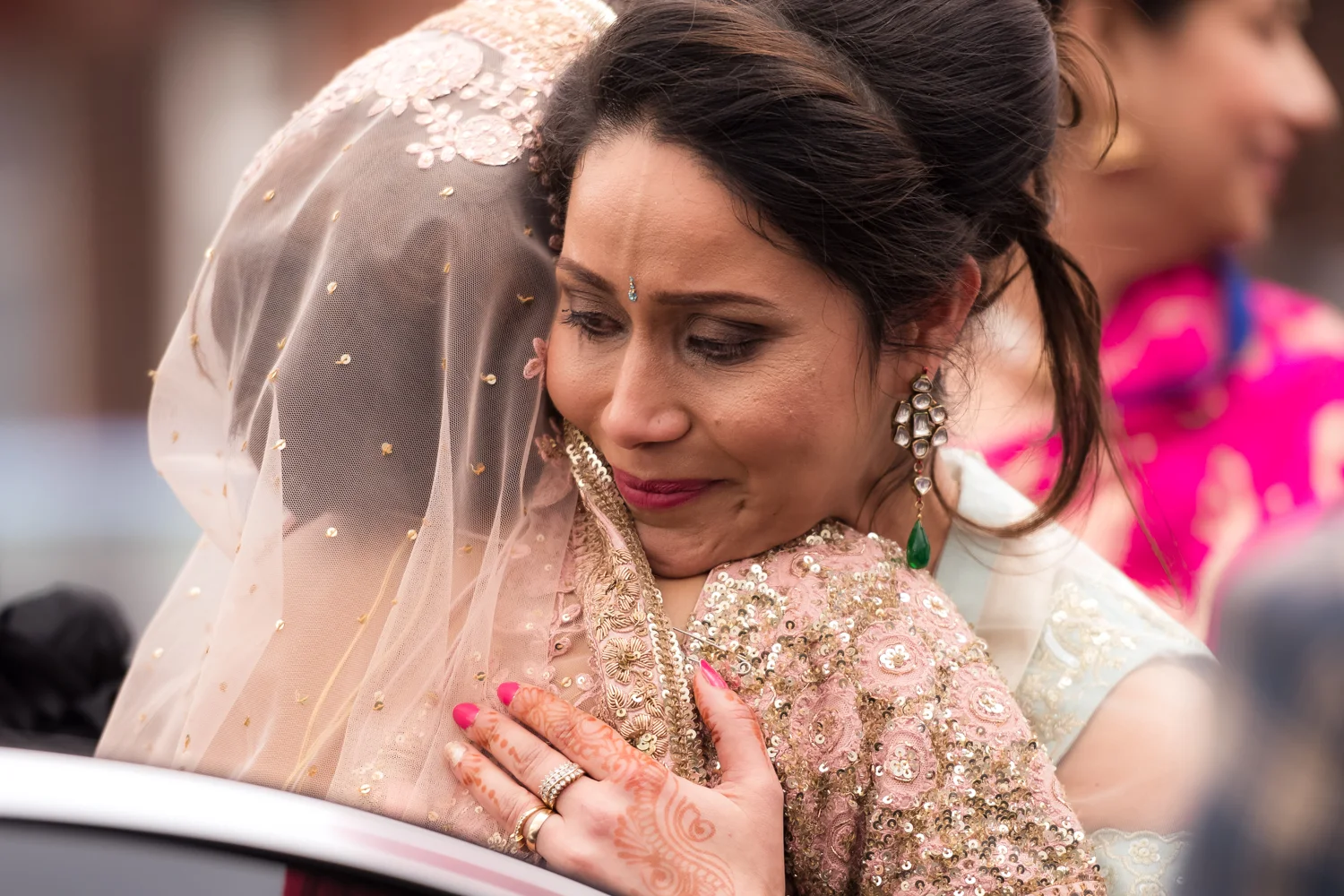

One arrival at the groom’s home the bride receives a warm and affectionate welcome from her new family. She is showered with flowers, fed sweet and offered blessings.
Please contact us if you’re interested in hiring us for your wedding.
We would love to be a part of your special day. Contact us here
Sikh Wedding Photography FAQs
Q: Do you photograph Anand Karaj ceremonies inside Gurdwaras?
Yes, we regularly photograph Anand Karaj ceremonies across London and the UK. We always work with respect for the traditions and the sanctity of the Gurdwara while capturing every meaningful moment.
Q: How many hours of coverage do you recommend for a Sikh wedding?
Most Sikh weddings are full-day celebrations, from the Milni and Anand Karaj through to the evening reception. We usually recommend full-day coverage to ensure no important moments are missed.
Q: Do you provide photography for pre-wedding events like the Maiyan or Jaggo?
Yes, we cover all Sikh pre-wedding events, including the Maiyan, Jaggo, and Sangeet. These events are an important part of the wedding story and add vibrancy to your album.
Q: Do you travel outside London for Sikh weddings?
Absolutely. We photograph Sikh weddings across the UK, including Birmingham, Leicester, Manchester and beyond. We also cover destination weddings worldwide.
Q: How many images do we receive, and are they edited?
Every couple receives a full set of carefully edited, high-resolution images. These are curated in our signature editorial style and delivered via a secure online gallery, with options for luxury wedding albums.